Table of Contents
Introduction
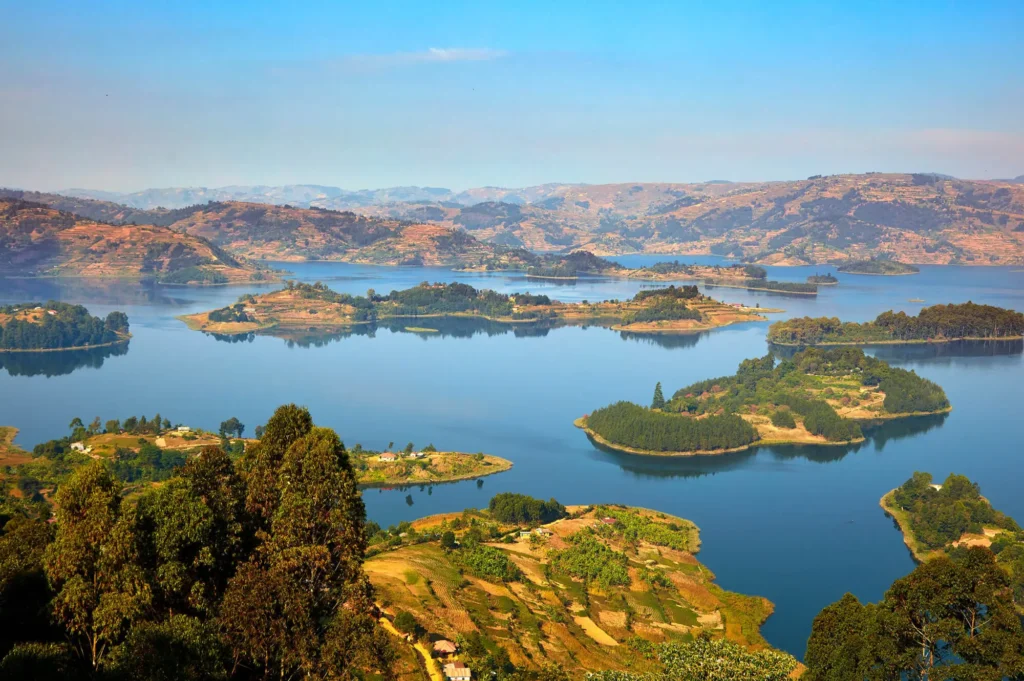
Located near Kabale in southwestern Uganda, Lake Bunyonyi is one of the country’s most scenic highland destinations, surrounded by terraced hills and dotted with numerous small islands. It is particularly popular with travelers combining Uganda gorilla trekking, wildlife safaris and scenic relaxation.
Yes, you can travel from Kampala to Lake Bunyonyi by road, but it is best treated as an overnight or multi-day destination rather than a conventional day trip.
The journey from Kampala takes most of a day by road, with current travel estimates commonly falling around 6–8 hours depending on traffic, stops and the exact route.
For Little Rock Safaris, Lake Bunyonyi is commercially important because it fits naturally into itineraries involving Bwindi Impenetrable National Park, Mgahinga, Queen Elizabeth National Park and Lake Mburo National Park.
Rather than treating Bunyonyi as simply another destination, this guide explains how to use it strategically in a Uganda safari.
How far is Lake Bunyonyi from Kampala?
Lake Bunyonyi is roughly 420–470 km from Kampala by road, depending on the route and the specific lakeside destination.
A realistic road journey is approximately 6–8 hours, although stops, Kampala traffic, road works, weather and the final approach to the lake can make the journey longer. Recent travel sources place the route at around 440–470 km and approximately seven to nine hours with stops.
The journey generally follows southwestern Uganda through areas such as:
Kampala → Masaka → Mbarara → Kabale → Lake Bunyonyi
For travelers on a private safari, the drive is not simply transportation. It becomes an opportunity to see Uganda’s changing landscapes, agricultural areas, towns and highland scenery.
Quick Lake Bunyonyi travel facts
| Information | Details |
|---|---|
| Location | Kabale District, southwestern Uganda |
| From Kampala | Approximately 420–470 km by road |
| Typical drive | About 6–8+ hours |
| Nearest major town | Kabale |
| Elevation | Around 1,950–1,962 m |
| Main experiences | Canoeing, boat trips, islands, hiking, relaxation |
| Best safari combination | Bwindi and southwestern Uganda |
| Ideal stay | 1–2 nights |
| Main transport around lake | Canoes and motorboats |
Lake Bunyonyi sits at high elevation, which explains its cooler climate compared with Kampala and much of Uganda’s lowland safari country.
Is Lake Bunyonyi worth visiting from Kampala?
Yes, but it is not the best choice for a one-day return trip from Kampala.
The distance makes Lake Bunyonyi much better suited to an overnight stay or as part of a longer Uganda safari.
If you have only one day available, destinations such as Mabamba Swamp, Ngamba Island, Jinja or Ziwa Rhino Sanctuary are more practical from Kampala.
Lake Bunyonyi becomes much more attractive when you have:
- 2–3 days available
- A gorilla trekking itinerary
- A southwestern Uganda safari
- Time to relax after trekking
- An interest in canoeing and island exploration
- A preference for scenic rather than wildlife-focused experiences
This is also reflected in current safari products: Lake Bunyonyi frequently appears alongside Bwindi gorilla trekking and other southwestern destinations rather than as an isolated one-day excursion.
How do you get from Kampala to Lake Bunyonyi?
The easiest option for safari travelers is a private road transfer from Kampala through Mbarara and Kabale.
The most practical route is:
Kampala → Masaka → Mbarara → Kabale → Lake Bunyonyi
For travelers using public transportation, buses can take you toward Kabale, after which you need another transfer to the lakeshore.
For a safari, however, a private vehicle is generally more convenient because you can stop along the route and continue directly to your accommodation.
Option 1: Private safari vehicle
This is the best option for most international travelers.
Advantages include:
- Hotel pick-up
- Flexible departure time
- Scenic stops
- Direct transfer to your lodge
- Driver-guide
- Easy combination with other parks
- No need to arrange multiple local transfers
Option 2: Public transport
You can travel by bus toward Kabale and arrange onward transportation to the lake.
This can be cheaper but requires more coordination.
Option 3: Fly and transfer
Travelers with limited time can consider a domestic flight toward southwestern Uganda followed by a road transfer.
This is more expensive but can substantially reduce road travel.
For most Little Rock clients, however, a private road safari remains the more useful option because the route itself can be incorporated into a wider Uganda itinerary.
How long does it take to drive from Kampala to Lake Bunyonyi?
Plan for most of a day.
A private safari should generally depart Kampala early, particularly if the objective is to reach the lake during daylight.
A practical schedule could look like:
| Time | Activity |
|---|---|
| 6:00–6:30 AM | Pick-up in Kampala |
| 7:00–10:00 AM | Drive toward western Uganda |
| 10:00–10:30 AM | Short refreshment stop |
| 10:30 AM–1:00 PM | Continue toward Mbarara |
| 1:00–2:00 PM | Lunch |
| 2:00–5:00 PM | Drive toward Kabale |
| 5:00–6:00 PM | Continue to Lake Bunyonyi |
| Evening | Check-in and lakeside relaxation |
Actual timings vary considerably according to traffic, road conditions, stops and accommodation location.
Recent 2026 sources also note that road conditions and construction can affect travel times, so travelers should avoid treating the journey as an exact six-hour transfer.
What is Lake Bunyonyi famous for?
Lake Bunyonyi is famous for its terraced hills, scenic islands, canoeing, cool highland climate and peaceful lakeside setting.
The name Bunyonyi is commonly associated with “place of many little birds,” reflecting the area’s birdlife.
The lake is also known for its numerous islands and spectacular views from surrounding hills.
Unlike destinations such as Queen Elizabeth National Park or Murchison Falls, Bunyonyi is primarily about:
scenery + relaxation + water activities + culture + hiking
rather than big-game viewing.
That makes it particularly valuable as a rest and recovery destination after gorilla trekking.
How many islands are on Lake Bunyonyi?
Lake Bunyonyi is commonly described as having 29 islands.
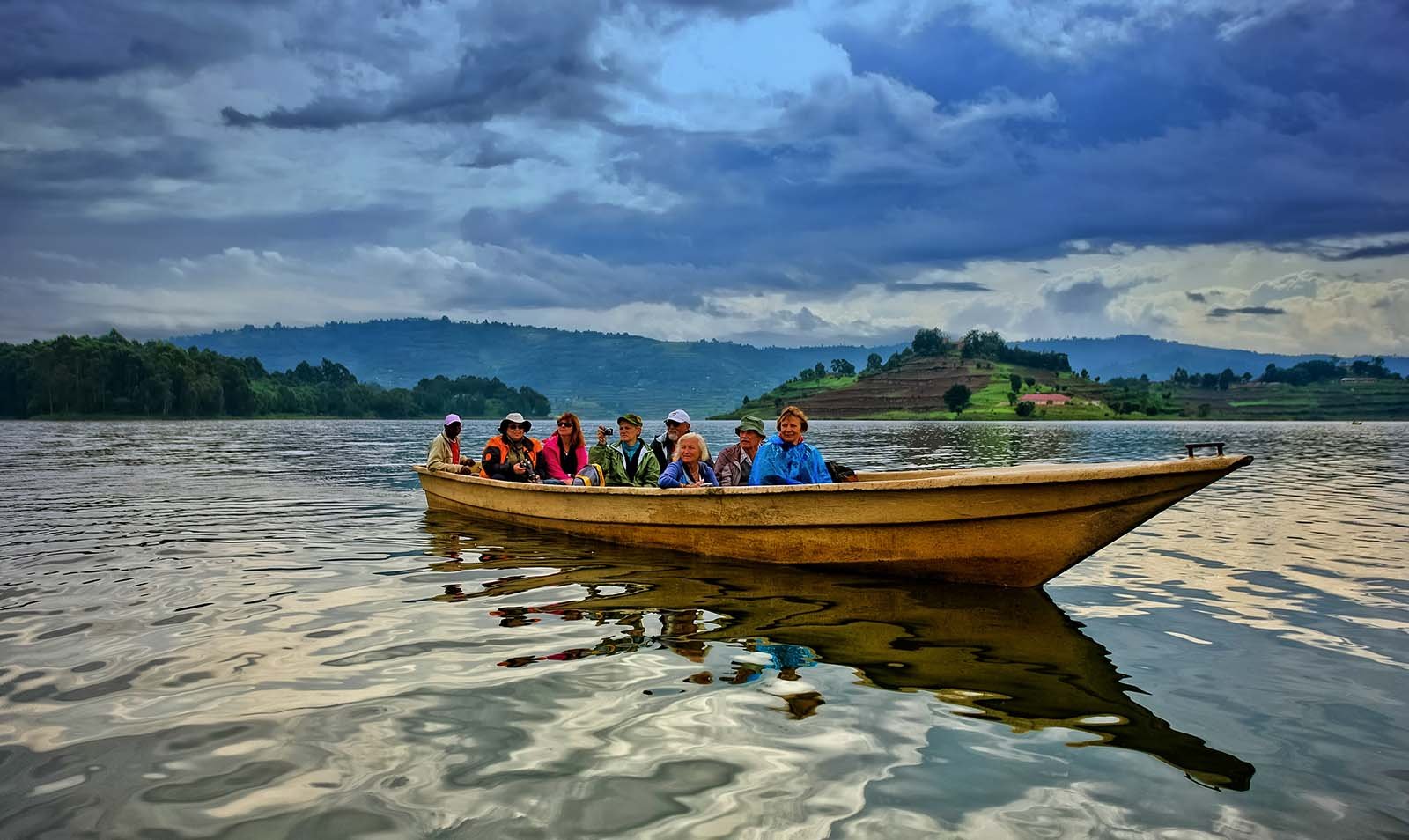
These islands are one of the lake’s defining features and can be explored by dugout canoe or motorboat.
Some have accommodation, while others are visited mainly for their scenery, history or cultural stories.
The most famous include:
- Akampene, also known as Punishment Island
- Bushara Island
- Kyahugye Island
- Bwama Island
- Njuyeera Island
The best way to appreciate the landscape is from the water.
What are the best things to do at Lake Bunyonyi?
The best things to do include canoeing, boat trips, island hopping, swimming, hiking, birdwatching and relaxing at a lakeside lodge.
1. Take a traditional canoe ride
A dugout canoe is one of the most authentic ways to experience Lake Bunyonyi.
Instead of rushing between attractions, you move slowly across the water while viewing the terraced hills and islands.
This is particularly enjoyable in the morning or late afternoon when the landscape is quieter.
2. Go island hopping
Island hopping allows visitors to experience different parts of the lake and hear local stories associated with its islands.
A motorboat is faster, while a traditional canoe provides a slower and more intimate experience.
3. Visit Punishment Island
Akampene, commonly called Punishment Island, is one of Bunyonyi’s most historically discussed islands.
The island has a difficult history connected with traditional practices surrounding unmarried pregnant women.
Because the story is often simplified in tourism marketing, responsible guides should provide historical context rather than sensationalizing it.
4. Go swimming
Lake Bunyonyi is unusual among many East African lakes because it is widely regarded as safe for swimming, with no crocodiles or hippos and no known bilharzia risk reported by tourism sources.
However, travelers should still follow their accommodation’s current swimming guidance and use designated safe areas.
The lake is also at high elevation, so the water can feel cool.
5. Go hiking
The surrounding hills offer excellent opportunities for walking and viewpoints.
A guided walk can be particularly rewarding because local guides can explain:
- Farming practices
- Terraced agriculture
- Local communities
- Birdlife
- Lake history
- Traditional culture
6. Enjoy birdwatching
The lake’s name itself references birds, and the surrounding wetlands, hills and water provide opportunities for birdwatching.
Travelers interested in serious birding can combine Bunyonyi with destinations such as Mabamba Swamp, especially if the itinerary begins or ends around Entebbe.
7. Relax
This is arguably the most important activity.
After several days of early-morning game drives or a demanding gorilla trek, Lake Bunyonyi provides an opportunity to slow down.
A good Bunyonyi itinerary should not be packed with activities.
Leave time for:
canoeing + scenery + good food + relaxation.
Can you swim in Lake Bunyonyi?
Yes, swimming is one of the activities associated with Lake Bunyonyi.
The lake is widely described as free of crocodiles and hippos, and tourism sources report an absence of bilharzia, making it one of Uganda’s more popular natural swimming destinations.
That does not mean every part of the lake should automatically be treated as a swimming area.
Use designated areas recommended by your lodge or local guide.
Is Lake Bunyonyi safe for swimming?
Lake Bunyonyi is generally regarded as safe for swimming, but visitors should follow local safety advice and swim in appropriate areas.
The lake’s high elevation also means the water and surrounding temperatures can be cooler than travelers expect.
If you have mobility or medical concerns, speak with your accommodation or guide before swimming.
What is the best time to visit Lake Bunyonyi?
The drier months are generally the easiest for travel, especially June–August and December–February.
These periods typically offer more stable road conditions and clearer views.
However, Lake Bunyonyi is a year-round destination.
Dry season
June–August and December–February
Best for:
- Road travel
- Hiking
- Clearer views
- Canoeing
- Photography
- Combining with gorilla trekking
Wet season
March–May and October–November
Advantages include:
- Greener landscapes
- Fewer tourists
- Lush scenery
- Excellent photographic conditions when weather clears
The trade-off is that some unpaved access roads around the lake can become more challenging.
Recent local reporting also notes that wet-season conditions can affect approach roads, particularly around the lakeshore.
How many days do you need at Lake Bunyonyi?
Two nights is ideal for most first-time visitors.
A simple itinerary could be:
Day 1: Kampala → Lake Bunyonyi
Day 2: Canoeing, island tour and relaxation
Day 3: Lake Bunyonyi → Bwindi or Kampala
If you are combining Bunyonyi with gorilla trekking, the lake can work extremely well for either one or two nights.
Can you visit Lake Bunyonyi after gorilla trekking?
Yes, and this is one of the best ways to include Lake Bunyonyi in a Uganda itinerary.
After a physically demanding gorilla trek in Bwindi, travelers often appreciate having somewhere peaceful to recover.
The combination is geographically sensible because Bunyonyi is in southwestern Uganda and is commonly incorporated into gorilla safari routes. Current safari listings show Bunyonyi repeatedly paired with Bwindi and other major Uganda destinations.
A typical route could be:
Kampala → Lake Mburo → Bwindi → Lake Bunyonyi → Entebbe
or:
Entebbe → Kibale → Queen Elizabeth → Bwindi → Lake Bunyonyi → Kampala
How far is Lake Bunyonyi from Bwindi?
Lake Bunyonyi is close enough to Bwindi to work naturally as a pre- or post-gorilla destination, although the exact driving time depends on which Bwindi sector you use.
The distance varies significantly between Buhoma, Ruhija, Rushaga and Nkuringo.
This is why safari itineraries should specify the actual gorilla sector rather than simply saying “Bwindi.”
Recent destination guidance places the lake around two hours from some Bwindi sectors, while other routes can take longer because of mountain roads.
For Little Rock, this is an important SEO opportunity:
“How far is Lake Bunyonyi from Bwindi?”
That should become a separate supporting article later and link back to this main guide.
Where should you stay at Lake Bunyonyi?
Choose your accommodation based on whether you want views, island access, budget value, family facilities or a quieter retreat.
Accommodation ranges from simple budget stays to comfortable mid-range lodges and higher-end properties.
Current travel reporting shows a wide range, from basic accommodation around the lake to more upscale properties with lake views and organized activities.
For Little Rock’s target market, the most useful categories are:
| Traveler | Best accommodation style |
|---|---|
| Budget | Simple lodge/guesthouse |
| Couples | Lakeside cottage |
| Families | Spacious lodge with easy road access |
| Mid-range safari | Comfortable lakeside lodge |
| Luxury | Scenic premium lakeside property |
| Gorilla trekkers | Lodge with easy transfer arrangements |
Do not choose purely based on photographs.
Ask about:
- Road access
- Boat transfer
- Hot water
- Meals
- Electricity
- Wi-Fi
- Lake views
- Canoe availability
- Family rooms
- Parking
How much does a Lake Bunyonyi trip cost?
The cost depends heavily on whether you travel independently, use a private safari vehicle, choose budget accommodation or add activities and other national parks.
A Lake Bunyonyi safari quotation can include:
| Cost | May be included |
|---|---|
| Private vehicle | Yes |
| Driver-guide | Yes |
| Fuel | Yes |
| Accommodation | Yes |
| Breakfast | Often |
| Canoe/boat trip | Depending on package |
| Meals | Depending on package |
| Activities | Depending on itinerary |
| Gorilla permit | Only if gorilla trekking is included |
| Travel insurance | Usually excluded |
| Tips | Usually excluded |
| Personal purchases | Usually excluded |
Published 2026 destination information shows substantial variation in accommodation and activity prices, so a fixed “Lake Bunyonyi cost” can be misleading.
For a private Little Rock Safaris itinerary, the most accurate quotation depends on:
number of travelers + accommodation level + travel dates + vehicle + activities + other destinations.
Is Lake Bunyonyi expensive?
It does not have to be.
Lake Bunyonyi offers options across different budgets.
Travelers can reduce costs by:
- Sharing a safari vehicle
- Choosing mid-range accommodation
- Staying two nights rather than adding unnecessary activities
- Using local canoe experiences
- Combining Bunyonyi with destinations already on their safari route
However, the cheapest option is not always the best value.
A good lakeside location and reliable transport can make a major difference to the experience.
What should you pack for Lake Bunyonyi?
Because Bunyonyi sits in Uganda’s highlands, pack warmer clothing than you would for a lowland safari.
Recommended items include:
- Light fleece or sweater
- Waterproof jacket
- Comfortable walking shoes
- Long trousers
- T-shirts
- Sun hat
- Sunscreen
- Insect repellent
- Swimwear
- Small backpack
- Camera
- Binoculars
- Reusable water bottle
- Personal medication
- Power bank
For gorilla trekking combinations, add proper trekking clothing and hiking footwear.
Is Lake Bunyonyi good for families?
Yes. Lake Bunyonyi is one of the more relaxing destinations for families traveling in southwestern Uganda.
Children can enjoy:
- Canoeing
- Boat rides
- Nature walks
- Birdwatching
- Swimming in suitable areas
- Island exploration
The lack of conventional safari game also means the experience is calmer than a national park.
Families should choose accommodation with safe access to the water and discuss boat safety with their guide.
Is Lake Bunyonyi good for couples?
Yes. It is particularly well suited to couples looking for a quiet lakeside escape.
The combination of:
terraced hills + islands + cool weather + private cottages + canoe rides
creates a very different experience from a conventional safari.
It can also be incorporated into a Uganda honeymoon itinerary after gorilla trekking.
Lake Bunyonyi vs Lake Mburo: Which is better?
Choose Lake Bunyonyi for scenery and relaxation; choose Lake Mburo for wildlife and a shorter transfer from Kampala.
| Lake Bunyonyi | Lake Mburo |
|---|---|
| Southwestern highlands | Southwestern savanna |
| Terraced hills | Open grasslands |
| Islands | Wildlife habitats |
| Canoeing | Game drives |
| Swimming | Boat safari |
| Hiking | Walking safari |
| Relaxation | Wildlife |
| Near Bwindi | Convenient from Kampala |
They can also be combined.
A particularly effective Uganda itinerary is:
Kampala → Lake Mburo → Bwindi → Lake Bunyonyi → Entebbe
This provides wildlife, gorillas and scenic relaxation in one route.
Lake Bunyonyi vs Lake Kivu: Which should you choose?
Choose Lake Bunyonyi if your itinerary is focused on Uganda; choose Lake Kivu if you are extending into Rwanda.
Lake Bunyonyi is particularly convenient after Bwindi or Mgahinga.
Lake Kivu, meanwhile, can work well on Rwanda itineraries.
For travelers crossing between Uganda and Rwanda, the two lakes can potentially form part of a broader East African itinerary.
Can Lake Bunyonyi be combined with gorilla trekking?
Absolutely. Lake Bunyonyi is one of the most practical scenic additions to a Uganda gorilla safari.
A common structure is:
Day 1
Kampala → Lake Mburo
Day 2
Lake Mburo → Bwindi
Day 3
Gorilla trekking
Day 4
Bwindi → Lake Bunyonyi
Day 5
Lake Bunyonyi → Entebbe/Kampala
This gives travelers time to recover after trekking rather than immediately beginning another long transfer.
Can Lake Bunyonyi be combined with Queen Elizabeth National Park?
Yes.
A longer western Uganda itinerary can combine:
Queen Elizabeth + Bwindi + Lake Bunyonyi
This is one of the strongest commercial combinations for Little Rock because it combines:
- Big-game viewing
- Kazinga Channel boat safari
- Gorilla trekking
- Highland scenery
- Canoeing
- Cultural experiences
The result is much more diverse than a gorilla-only trip.
Is Lake Bunyonyi worth adding to a Uganda safari?
Yes, if you have at least one or two spare nights and your route already passes through southwestern Uganda.
It is especially worthwhile for:
- Gorilla trekkers
- Couples
- Families
- Photographers
- Birdwatchers
- Travelers who enjoy scenery
- Travelers wanting a slow-paced safari day
- Visitors entering or leaving Uganda through southwestern routes
It is less suitable if your trip is extremely short and your priority is maximizing wildlife viewing.
What is the best Lake Bunyonyi itinerary from Kampala?
Day 1: Kampala to Lake Bunyonyi
Leave Kampala early and travel southwest through Masaka and Mbarara toward Kabale.
Depending on your interests, you can stop at the Equator, enjoy lunch en route and continue toward the highlands.
Arrive at Lake Bunyonyi in the late afternoon, check into your lodge and enjoy the views.
Day 2: Lake Bunyonyi island and canoe experience
After breakfast, take a traditional canoe or motorboat excursion.
Explore selected islands, enjoy the scenery and learn about local history and communities.
Return to your lodge for lunch and spend the afternoon relaxing.
Day 3: Lake Bunyonyi to Bwindi or Kampala
If you are continuing to Bwindi, depart after breakfast toward your selected sector.
If returning to Kampala, begin the journey early.
For international travelers, an itinerary through Bwindi → Lake Bunyonyi → Entebbe can be more rewarding than returning directly to Kampala.
What makes Lake Bunyonyi different from other Uganda destinations?
Lake Bunyonyi offers something that most safari destinations cannot: time to slow down.
Uganda trips can involve long drives, early game drives, forest trekking and multiple hotel changes.
Bunyonyi breaks that rhythm.
Instead of chasing wildlife, you watch the landscape.
Instead of rushing between attractions, you paddle.
Instead of spending another morning in a safari vehicle, you can sit beside the lake with a cup of coffee and watch the hills change color.
That makes Bunyonyi more than a scenic stop.
It is a strategic rest point in a demanding Uganda safari itinerary.
Frequently Asked Questions About Lake Bunyonyi
How far is lake bunyonyi from kampala
Approximately 420–470 km by road, depending on the route, with a typical journey taking around 6–8 hours or longer with stops.
Can I visit Lake Bunyonyi as a day trip from Kampala?
Technically possible but not recommended. The distance makes an overnight or multi-day visit much more worthwhile.
How many days should I spend at Lake Bunyonyi?
Two nights is ideal for most travelers, although one night can work when it is part of a longer safari.
Can you swim in Lake Bunyonyi?
Yes. The lake is widely regarded as safe for swimming, although visitors should use suitable areas and follow local advice.
Is Lake Bunyonyi near Bwindi?
Yes. It is close enough to work naturally before or after gorilla trekking, although travel time depends on the specific Bwindi sector.
What is Lake Bunyonyi famous for?
Its terraced hills, islands, canoeing, birdlife, peaceful atmosphere and scenic highland setting.
Is Lake Bunyonyi good after gorilla trekking?
Yes. It is one of the best places to relax after the physical demands of gorilla trekking.
What can you do at Lake Bunyonyi?
Canoeing, island hopping, boat trips, swimming, hiking, birdwatching and lakeside relaxation are the main activities.
What is the best time to visit Lake Bunyonyi?
June–August and December–February are generally favorable for travel and outdoor activities, although the lake can be visited year-round.
Is Lake Bunyonyi safe?
It is generally considered a safe tourism destination, but normal travel precautions and local guidance should always be followed.
Is Lake Bunyonyi worth visiting?
Yes, particularly if you are combining it with Bwindi, Mgahinga or another southwestern Uganda safari destination.
Can I visit Lake Bunyonyi after gorilla trekking?
Yes, and this is one of the strongest ways to use the destination
Can I combine Lake Bunyonyi with Lake Mburo?
Yes. The two destinations complement each other well, combining savanna wildlife with highland scenery and lake activities.
Book a Lake Bunyonyi Safari with Little Rock Safaris
Lake Bunyonyi works best when it is integrated into a carefully planned Uganda safari rather than treated as an isolated destination.
Little Rock Safaris can build Bunyonyi into itineraries featuring Bwindi gorilla trekking, Mgahinga, Queen Elizabeth National Park, Lake Mburo, Kibale and other Uganda destinations.
The company’s Uganda safari portfolio already covers the destinations and experiences that naturally connect with Bunyonyi, making it possible to create a route based on your available days, interests and preferred accommodation level.
A sample Little Rock route
Kampala → Lake Mburo → Bwindi → Lake Bunyonyi → Entebbe
Or for a broader primate and wildlife journey:
Entebbe → Kibale → Queen Elizabeth → Bwindi → Lake Bunyonyi → Entebbe
The right itinerary depends on whether your priority is:
gorillas + wildlife + scenery + relaxation + culture
or a shorter focus on southwestern Uganda.
Ready to add Lake Bunyonyi to your Uganda safari?
Tell Little Rock Safaris:
- Your travel dates
- Number of travelers
- Your preferred accommodation level
- Whether you want gorilla trekking
- Whether you want chimpanzee trekking
- Your preferred number of nights at Bunyonyi
- Whether you want private or shared travel
- Your arrival and departure airport
Little Rock can then build the route around your priorities instead of forcing you into a fixed itinerary.
Lake Bunyonyi is not simply a place to stop between destinations. It is where a busy Uganda safari slows down long enough for you to appreciate the landscape.
Kampala → Mbarara → Kabale → Lake Bunyonyi → Islands → Canoe → Bwindi → Gorillas.
That combination is one of the most rewarding ways to experience southwestern Uganda.