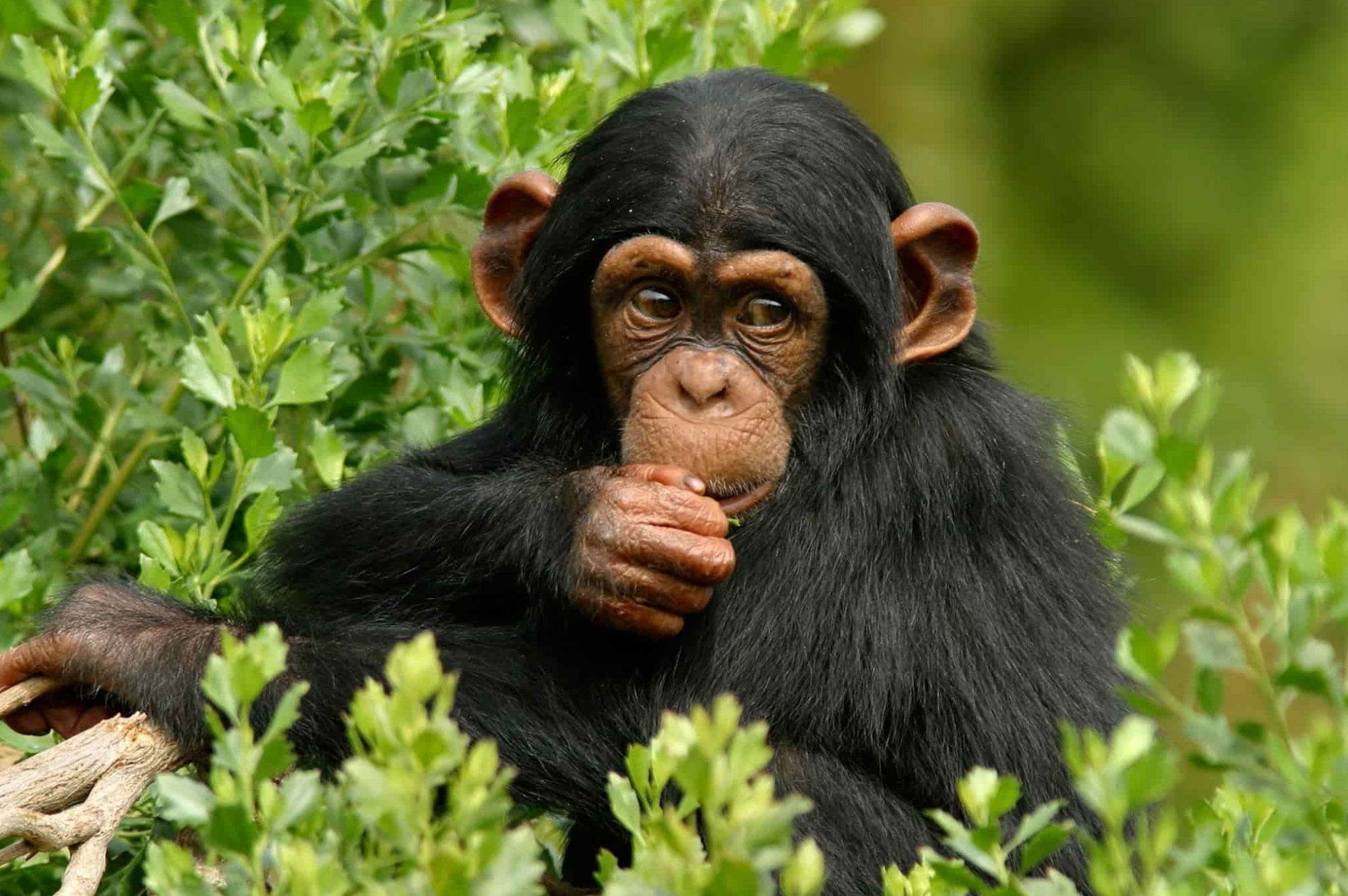
The experience combines a road transfer from Kampala to Entebbe, a scenic boat journey across Lake Victoria and a guided visit to Ngamba Island Chimpanzee Sanctuary, where rescued and orphaned chimpanzees are cared for in a protected forest environment.
Table of Contents
Introduction
Yes, you can visit Ngamba Island from Kampala in one day, and it is one of Uganda’s most convenient primate experiences for travelers who have limited time.
Ngamba Island is approximately 23 kilometres southeast of Entebbe, and access is by boat. The Chimpanzee Trust currently operates daily speedboat departures from Entebbe at 9:00 AM and 12:45 PM, with the speedboat journey taking approximately 45–50 minutes. Pre-booking is required.
For travelers based in Kampala, this makes Ngamba Island particularly useful as a one-day Uganda wildlife experience that does not require traveling to western Uganda.
Little Rock Safaris already offers a 1-Day Ngamba Island Chimpanzee Tour as part of its Uganda Day Tours portfolio, alongside Lake Mburo, Mabamba, Ziwa Rhino Sanctuary and Jinja experiences.
Can you visit Ngamba Island from Kampala in one day?
Yes. A one-day Ngamba Island tour from Kampala is practical and can usually be completed within a full day.
The journey involves two main sections:
Kampala → Entebbe → Lake Victoria → Ngamba Island
The road transfer from Kampala to Entebbe is followed by a boat crossing to the sanctuary.
Because the boat schedule determines the timing of the entire experience, travelers should not treat Ngamba Island as an attraction that can simply be visited at any time during the day.
The Chimpanzee Trust currently lists:
| Transport | Departure | Journey |
|---|---|---|
| Speedboat | 9:00 AM | 45–50 minutes |
| Speedboat | 12:45 PM | 45–50 minutes |
| Motorized canoe | 8:30 AM | About 90 minutes |
| Motorized canoe | 12:00 PM | About 90 minutes |
These departures operate from Entebbe, with the sanctuary approximately 23 km southeast of the city.
For a one-day trip from Kampala, the morning departure is generally the most useful because it leaves more time for the sanctuary experience and return journey.
What is Ngamba Island Chimpanzee Sanctuary?
Ngamba Island is a sanctuary for rescued and orphaned chimpanzees located on Lake Victoria.
The Chimpanzee Sanctuary and Wildlife Conservation Trust manages the sanctuary and has operated chimpanzee conservation programs since 1998. Its work focuses on chimpanzee welfare, conservation education and habitat protection.
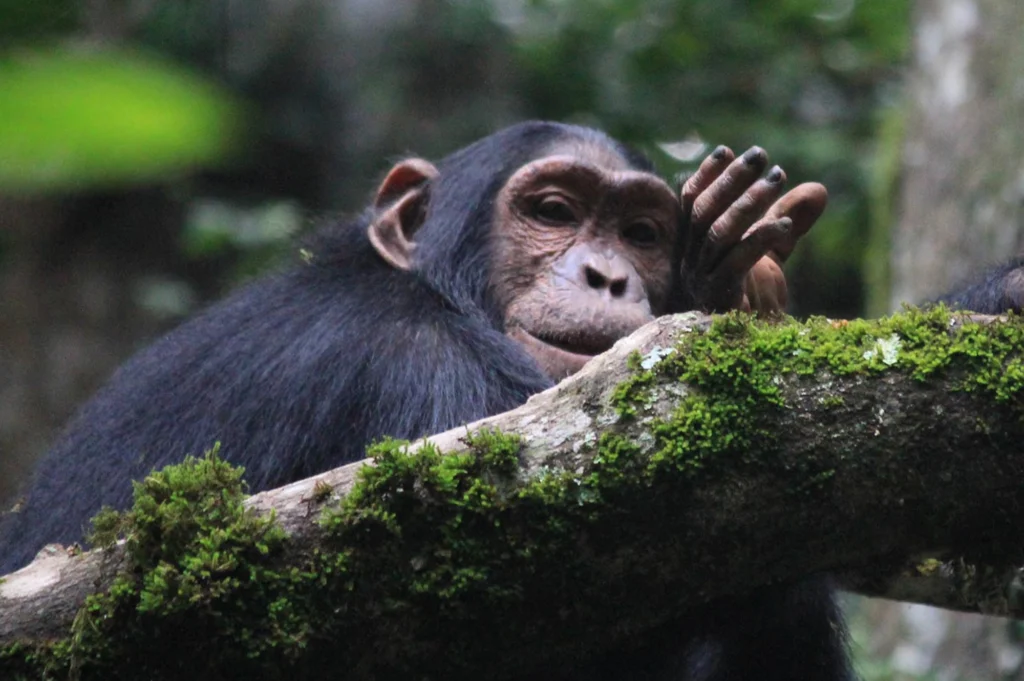
Importantly, Ngamba is not a conventional zoo and is not the same experience as chimpanzee trekking in Kibale Forest.
The sanctuary provides lifelong care for chimpanzees that cannot safely return to the wild because of factors such as human habituation, health conditions or the lack of suitable release sites.
Uganda’s 2026 State of Wildlife Resources report describes Ngamba as a rescue and rehabilitation centre providing lifelong care to orphaned and confiscated chimpanzees that cannot be returned to the wild. The report recorded 54 chimpanzees at the sanctuary as of 2025.
That conservation mission is an important part of what visitors are supporting when they book a visit.
How do you get to Ngamba Island from Kampala?
You travel by road from Kampala to Entebbe and then continue by boat across Lake Victoria to Ngamba Island.
A typical journey is:
Kampala → Entebbe → Pelican Lodge & Marina → Lake Victoria → Ngamba Island
The official Chimpanzee Trust identifies Pelican Lodge & Marina in Entebbe as the departure point for its standardized speedboat service.
The boat journey itself is part of the experience rather than simply a transfer.
Lake Victoria opens up around you as you leave the mainland, and the island setting creates a completely different atmosphere from a conventional land-based wildlife excursion.
How long is the boat ride to Ngamba Island?
The official speedboat journey takes approximately 45–50 minutes.
A slower motorized canoe takes about 90 minutes according to the Chimpanzee Trust’s current transport information.
For a one-day tour from Kampala, the speedboat is generally the more time-efficient option.
What time should you leave Kampala for Ngamba Island?
For the morning Ngamba Island experience, an early departure from Kampala is essential.
Because the speedboat departs Entebbe at 9:00 AM, your safari vehicle needs to reach the departure point before boarding and registration.
A practical private itinerary might look like:
| Time | Activity |
|---|---|
| 6:00–6:30 AM | Pick-up in Kampala |
| 7:15–8:00 AM | Arrive in Entebbe |
| 8:00–8:45 AM | Registration and boarding preparations |
| 9:00 AM | Speedboat departs |
| 9:45–10:00 AM | Arrive at Ngamba |
| 10:00–11:00 AM | Sanctuary orientation |
| 11:00 AM | Chimpanzee viewing/feeding |
| 12:00 PM onward | Island experience and return |
| Afternoon | Return to Entebbe and Kampala |
Exact timing depends on the booked boat, sanctuary program and road traffic.
The key point is that you should not plan to leave Kampala at 8:00 AM and still expect to catch the 9:00 AM boat.
What happens on a Ngamba Island day trip?
A typical visit combines the boat journey, sanctuary orientation, chimpanzee viewing, conservation education and time around the island.
After reaching the island, visitors receive information about the sanctuary and the chimpanzees before proceeding to the designated viewing area.
The main attraction is observing the chimpanzees during their scheduled feeding period.
Visitors watch from a designated platform rather than entering the chimpanzee enclosure.
This distinction is important.
Ngamba Island is designed around responsible wildlife viewing, not direct physical interaction with wild or rescued chimpanzees.
The experience allows visitors to observe social behavior, feeding, vocalizations and interactions while learning about chimpanzee welfare and conservation.
What time do the chimpanzees feed at Ngamba Island?
The Chimpanzee Trust currently lists chimpanzee feeding/viewing times at 7:30 AM, 11:00 AM, 2:30 PM and 6:30 PM.
For day visitors, the 11:00 AM and 2:30 PM sessions are particularly relevant depending on the boat departure selected.
This is one reason why booking through an experienced safari operator is useful.
The itinerary needs to coordinate:
Kampala departure → Entebbe check-in → boat departure → island arrival → chimpanzee viewing → return boat.
Missing a boat connection can affect the entire day’s schedule.
Can you touch or feed the chimpanzees at Ngamba Island?
No. Visitors should not expect a hands-on chimpanzee encounter.
The experience is based on observing the chimpanzees from designated visitor areas and learning about their care.
This is an important distinction between a responsible sanctuary visit and wildlife tourism based on physical contact.
Chimpanzees are powerful wild animals even when they have become accustomed to human care.
Uganda Wildlife Authority emphasizes that chimpanzees remain wild animals and that people should avoid approaching, feeding or attempting to handle them.
For travelers, this means the attraction is the opportunity to observe and understand, not touch or pose with chimpanzees.
Is Ngamba Island the same as chimpanzee trekking?
No. Ngamba Island and chimpanzee trekking in Kibale are fundamentally different experiences.
| Ngamba Island | Kibale chimpanzee trekking |
|---|---|
| Rescue sanctuary | Wild forest ecosystem |
| Rescued/orphaned chimps | Wild chimpanzee communities |
| View from designated platform | Walk through forest |
| Boat trip from Entebbe | Road transfer to Kibale |
| Suitable for a day trip | Usually part of a multi-day safari |
| Conservation/welfare focus | Wildlife tracking experience |
| No forest trek required | Walking through forest required |
Ngamba is therefore ideal for someone who wants to see chimpanzees but has only a day available around Kampala or Entebbe.
Kibale is better for travelers whose priority is tracking wild chimpanzees in their natural forest habitat.
Little Rock can use this distinction as an internal-link opportunity: the Ngamba article should link to its Kibale safari products rather than allowing the two pages to compete for the same keyword intent.
Is Ngamba Island worth visiting from Kampala?
Yes, especially if you have limited time and want a combination of primates, Lake Victoria scenery and conservation education.
The experience is particularly attractive because you do not need to travel several hours into western Uganda.
Instead, you can experience:
Kampala → Entebbe → Lake Victoria → Ngamba Island → rescued chimpanzees
within one organized day.
The sanctuary also provides an experience that complements a conventional Uganda safari.
After several days of game drives, Ngamba offers something different: a focused primate and conservation experience.
What makes Ngamba Island different from a normal Uganda safari?
Ngamba Island is centered on chimpanzee welfare and conservation rather than conventional game viewing.
There are no safari game drives on the island.
The experience is about:
- Chimpanzee viewing
- Conservation education
- Sanctuary care
- Lake Victoria
- Birdlife
- Forest habitat
- Boat travel
- Photography
- Learning about rescued chimpanzees
The Chimpanzee Trust currently describes its mission around sustainable chimpanzee conservation, sanctuary care and protection of their natural habitats.
This makes the experience particularly valuable for travelers interested in responsible wildlife tourism.
What animals can you see at Ngamba Island?
Chimpanzees are the main attraction, but Ngamba Island also supports other wildlife and birdlife.
The sanctuary’s forested island environment provides habitat for a range of species.
However, travelers should not book Ngamba expecting a traditional safari with lions, elephants, giraffes or buffalo.
The product is fundamentally a chimpanzee and Lake Victoria experience.
If you want Uganda’s large mammals, Little Rock can instead build an itinerary around destinations such as Queen Elizabeth, Murchison Falls or Lake Mburo.
How many chimpanzees live at Ngamba Island?
The sanctuary currently cares for more than 50 rescued chimpanzees.
The Chimpanzee Trust currently states that it cares for 55 orphaned and rescued chimpanzees, while Uganda’s 2026 State of Wildlife Resources report recorded 54 chimpanzees as of 2025.
Because sanctuary populations can change through rescues, deaths and transfers, it is better for evergreen content to say “more than 50 rescued chimpanzees” rather than locking the article to one number.
How big is Ngamba Island?
Ngamba Island covers approximately 100 acres, with around 95 acres of rainforest habitat.
The forest environment is an important part of the sanctuary because it allows rescued chimpanzees to live in a more natural setting than a conventional enclosure.
The island itself is surrounded by Lake Victoria, giving visitors a distinctive combination of forest and lake scenery.
What is the best time to visit Ngamba Island?
Ngamba Island can be visited throughout the year because the sanctuary operates as a permanent conservation facility rather than a seasonal wildlife destination.
The most important factor is not a particular month but your boat and feeding-session schedule.
The official sanctuary currently provides daily boat departures and multiple chimpanzee viewing times.
For photographers, the best timing may depend on light, weather and the scheduled chimpanzee viewing session.
For travelers with only one day, choose the departure that provides the most comfortable connection between Kampala, Entebbe and the sanctuary.
What should you pack for Ngamba Island?
For a day trip, pack light.
Recommended packing list
- Comfortable walking shoes
- Lightweight clothing
- Sun hat
- Sunglasses
- Sunscreen
- Insect repellent
- Camera
- Binoculars
- Small backpack
- Reusable water bottle
- Light rain jacket
- Personal medication
- Waterproof bag for electronics
A light waterproof layer is especially useful because you will be traveling by boat on Lake Victoria.
If photography is important, protect cameras and lenses against water spray during the crossing.
Is Ngamba Island good for families?
Yes. Ngamba Island can be a particularly engaging experience for families because it combines wildlife, conservation education and a boat journey.
Children can learn about chimpanzees, their behavior and the challenges facing rescued wildlife while seeing the animals in a protected forest environment.
The experience is also less physically demanding than chimpanzee trekking in Kibale.
That makes it useful for families who want a primate experience without committing to a forest trek.
Parents should nevertheless follow sanctuary instructions carefully and ensure children understand that chimpanzees are wild animals.
Is Ngamba Island good for couples?
Yes. The combination of a Lake Victoria boat ride, island setting and wildlife experience makes Ngamba suitable for couples seeking a short experience around Kampala or Entebbe.
It can also work well as an addition before or after a longer Uganda safari.
For example:
Kampala → Ngamba Island → Entebbe
or:
Entebbe → Ngamba Island → Kibale → Queen Elizabeth → Bwindi
The second option turns the sanctuary into one component of a broader Uganda primate and wildlife itinerary.
Can Ngamba Island be combined with other Entebbe attractions?
Yes, but the combination should be planned around the boat departure and return time.
Depending on the chosen schedule, travelers may combine Ngamba with selected Entebbe experiences.
Possible additions include:
- Uganda Wildlife Conservation Education Centre
- Botanical gardens
- Lake Victoria experiences
- Mabamba Swamp
- Shoebill birding
- Entebbe cultural experiences
However, do not overload a one-day itinerary.
Ngamba already requires road transfers, boat travel and a sanctuary visit.
For travelers who want both Ngamba Island and Mabamba Swamp, a dedicated combination itinerary can be designed, but it should be scheduled carefully around the boat timetable.
Can I combine Ngamba Island with Mabamba Swamp?
Yes, Ngamba Island and Mabamba Swamp can be combined in a carefully planned Entebbe-based day, particularly for travelers interested in primates and birding.
Mabamba is famous for shoebill sightings, while Ngamba focuses on rescued chimpanzees.
This creates an unusual combination:
Shoebill + Lake Victoria + chimpanzees
However, because both activities have specific timing requirements, it is better to arrange them through a tour operator rather than attempting to coordinate boats independently.
Little Rock already offers 1-Day Mabamba Shoebill Birding alongside its Ngamba Island day tour, so these products can be cross-linked commercially.
How much does a Ngamba Island tour cost?
There is no single universal Ngamba Island tour price because the total cost depends on the boat option, sanctuary fees, transfers, group size, meals and operator inclusions.
A quotation may include:
| Cost component | Usually relevant |
|---|---|
| Kampala transfer | Yes |
| Entebbe transfer | Yes |
| Return boat | Yes |
| Sanctuary entry | Yes |
| Chimpanzee viewing | Yes |
| Driver-guide | Depending on package |
| Lunch | Depending on package |
| Drinks | Depending on operator |
| Tips | Usually excluded |
| Travel insurance | Usually excluded |
| Personal expenses | Usually excluded |
Current third-party 2026 listings show full-day Ngamba experiences advertised at several different prices, which reinforces why travelers should compare inclusions rather than choosing purely on the headline price.
For Little Rock, the better commercial approach is to quote on request, based on travel date, number of travelers and required inclusions. Little Rock currently lists its 1-Day Ngamba Island Chimpanzee Tour as “On request / per person.”
Do you need to book Ngamba Island in advance?
Yes. Pre-booking is required according to the Chimpanzee Trust.
This is particularly important because boat transfers operate on scheduled departures rather than a continuous ferry service.
Pre-booking allows the operator to coordinate:
- Your Kampala or Entebbe pick-up.
- Arrival at the departure point.
- Boat reservation.
- Sanctuary entry.
- Chimpanzee viewing session.
- Return boat.
- Ground transfer back to your accommodation.
For international travelers with fixed flights, advance booking is especially advisable.
What is the ideal Ngamba Island itinerary from Kampala?
6:00–6:30 AM — Pick-up in Kampala
Your Little Rock Safaris driver-guide collects you from your hotel or agreed location.
6:30–8:00 AM — Drive to Entebbe
Travel toward Entebbe and the Lake Victoria departure point.
8:00–8:45 AM — Registration and boarding
Complete the necessary arrangements before boarding the morning speedboat.
9:00 AM — Boat to Ngamba Island
Begin the approximately 45–50-minute Lake Victoria crossing.
10:00 AM — Arrive at Ngamba Island
Receive an orientation and learn about the sanctuary and its conservation work.
11:00 AM — Chimpanzee viewing
Observe the chimpanzees during the scheduled feeding/viewing session from the designated platform.
12:00–1:00 PM — Island experience
Enjoy the island environment, birdlife and conservation interpretation before preparing for the return.
Afternoon — Boat back to Entebbe
Return across Lake Victoria.
Late afternoon — Drive to Kampala
Transfer back to your hotel.
Exact timings should be confirmed against the boat and sanctuary schedule when booking.
What is included in a Little Rock Ngamba Island safari?
A private Little Rock package can be structured around your requirements.
Potential inclusions include:
- Kampala or Entebbe hotel pick-up
- Private transportation
- Professional driver-guide
- Return boat transfer
- Ngamba Island sanctuary entry
- Chimpanzee viewing experience
- Drinking water
- Ground transfers
Depending on your selected package, meals and optional activities can be added.
The important point is to request a detailed quotation showing exactly what is included.
What is usually excluded?
Typical exclusions may include:
- International flights
- Travel insurance
- Personal purchases
- Alcoholic beverages
- Tips
- Optional activities
- Personal expenses
- Services not specifically listed in the quotation
Always check the final itinerary and invoice before payment.
Is Ngamba Island ethical?
Ngamba Island’s primary purpose is chimpanzee rescue, welfare and conservation, making the sanctuary visit fundamentally different from tourism based on direct animal contact.
The Chimpanzee Trust states that the sanctuary provides lifelong care for rescued chimpanzees while also supporting conservation education and habitat protection.
Uganda’s national chimpanzee conservation strategy also identifies Ngamba as one of the country’s primary ex-situ institutions involved in the care of confiscated chimpanzees and conservation education.
For responsible travelers, this means the most important thing is to follow the sanctuary’s visitor rules.
Do not attempt to touch, feed or approach the chimpanzees outside designated viewing arrangements.
Ngamba Island vs Kibale: Which should you choose?
Choose Ngamba Island for convenience and a sanctuary-based chimpanzee experience; choose Kibale for wild chimpanzee trekking in a natural forest.
Choose Ngamba Island if you:
- Have one day
- Are staying in Kampala or Entebbe
- Want a boat experience
- Prefer a less physically demanding activity
- Are traveling with family
- Want conservation education
- Want to see rescued chimpanzees
Choose Kibale if you:
- Have several days
- Want wild chimpanzee tracking
- Enjoy hiking
- Want a forest experience
- Are building a western Uganda safari
- Want to combine chimpanzees with Queen Elizabeth and Bwindi
There is no need to treat the two as competitors.
For some travelers, doing both creates a richer understanding of chimpanzee conservation—from rescued animals receiving lifelong care at Ngamba to wild chimpanzees living in Uganda’s forests.
Is Ngamba Island worth adding to a Uganda safari?
Yes, particularly at the beginning or end of a longer Uganda itinerary.
Its location near Entebbe makes it logistically convenient.
For example:
Option 1: Start your safari
Entebbe → Ngamba Island → Kibale → Queen Elizabeth → Bwindi
Option 2: End your safari
Bwindi → Queen Elizabeth → Kampala → Ngamba Island → Entebbe
The second option can be particularly convenient for travelers with an international flight from Entebbe because the final wildlife experience remains close to the airport area.
Why choose Little Rock Safaris for Ngamba Island?
Little Rock Safaris already operates a dedicated 1-Day Ngamba Island Chimpanzee Tour within its Uganda Day Tours portfolio. The company also offers other short experiences, including Mabamba Shoebill, Ziwa Rhino Sanctuary, Lake Mburo and Jinja, allowing travelers to build a customized itinerary rather than booking unrelated transfers separately.
Little Rock’s site states that its customized tours are designed around travelers’ interests, preferences and travel style, with flexibility around destinations, activities and accommodation.
That is particularly useful for Ngamba because boat schedules need to be coordinated with your ground transportation.
A well-planned private trip should not simply sell you a boat ticket. It should make the entire day work.
Frequently Asked Questions About Ngamba Island
How far is Ngamba Island from Entebbe?
Ngamba Island is approximately 23 km southeast of Entebbe. It is reached by boat across Lake Victoria.
Can I visit Ngamba Island from Kampala in one day?
Yes. A one-day trip from Kampala is one of the most convenient ways to visit the sanctuary
How do I get to Ngamba Island?
Travel from Kampala to Entebbe by road and then take a boat across Lake Victoria. Speedboats currently depart Entebbe at 9:00 AM and 12:45 PM.
What time do chimpanzees feed at Ngamba Island?
The Chimpanzee Trust currently lists viewing/feeding times at 7:30 AM, 11:00 AM, 2:30 PM and 6:30 PM.
Is Ngamba Island a chimpanzee trekking destination?
No. It is a sanctuary for rescued and orphaned chimpanzees. Wild chimpanzee trekking is a different experience, notably available in Kibale.
Is Ngamba Island suitable for children?
Yes. Its relatively accessible sanctuary format makes it suitable for families, although children should be supervised and taught to respect wildlife viewing rules.
Is Ngamba Island worth visiting?
Yes, especially for travelers with limited time who want chimpanzees, Lake Victoria and a conservation-focused experience without traveling to western Uganda.
How much does Ngamba Island cost?
Prices vary according to boat transfers, sanctuary fees, transport, group size, meals and other inclusions. Little Rock currently quotes its Ngamba day tour on request.
Do I need to book Ngamba Island in advance?
Yes. Pre-booking is required by the Chimpanzee Trust.
Can I combine Ngamba Island with Mabamba Swamp?
Yes, but the itinerary must be carefully timed around boat departures and the shoebill experience.
Can I combine Ngamba Island with Kibale?
Yes. The two experiences complement each other because Ngamba focuses on rescued chimpanzees while Kibale offers wild chimpanzee tracking.
What should I wear to Ngamba Island?
Wear lightweight, comfortable clothing and closed shoes. Bring sun protection, insect repellent and a light waterproof layer for the boat crossing.
Is Ngamba Island open all year?
The sanctuary operates as a year-round visitor destination, but travelers should confirm availability and boat schedules when booking.
Book a 1-Day Ngamba Island Tour from Kampala
Ngamba Island is one of the easiest ways to add a meaningful chimpanzee conservation experience to a Uganda itinerary without committing to a multi-day safari.
From Kampala, the journey combines a road transfer to Entebbe, a scenic Lake Victoria crossing and a guided visit to a sanctuary caring for rescued chimpanzees.
The experience is especially suitable for:
Short-stay visitors + families + couples + primate enthusiasts + conservation-minded travelers + travelers with an extra day around Kampala or Entebbe.
Little Rock Safaris currently offers a 1-Day Ngamba Island Chimpanzee Tour and can customize the experience around your departure point, preferred boat schedule and wider Uganda itinerary.
Explore Little Rock Safaris Uganda Day Tours and request a personalized Ngamba Island itinerary.
For the most accurate quotation, provide:
- Your travel date
- Number of travelers
- Kampala or Entebbe hotel
- Preferred morning or afternoon experience
- Whether you want private transportation
- Whether lunch should be included
- Whether you want to combine Ngamba with another Entebbe experience
- Whether Ngamba is part of a longer Uganda safari
Your Ngamba Island experience starts on the mainland—but the adventure begins when the boat leaves Entebbe.
Kampala → Entebbe → Lake Victoria → Ngamba Island → Chimpanzees → Conservation → Kampala.