Best Time to Visit Murchison Falls National Park: Month-by-Month Safari Guide
Table of Contents
Introduction
The best time to visit Murchison Falls National Park is during the drier periods from December to February and June to September, when wildlife is generally easier to find around water sources and safari roads are more favourable; however, January to March can be especially rewarding for birdwatchers, while the wetter months offer greener scenery, fewer tourists and potentially better value.
That means there is no single “perfect” month for every traveler.
If your priority is game viewing and a classic Uganda safari, choose the dry season. If you want excellent birding and fewer visitors, consider January to March. If lush scenery, lower visitor numbers and a quieter safari appeal to you, the wetter months can also be worthwhile.
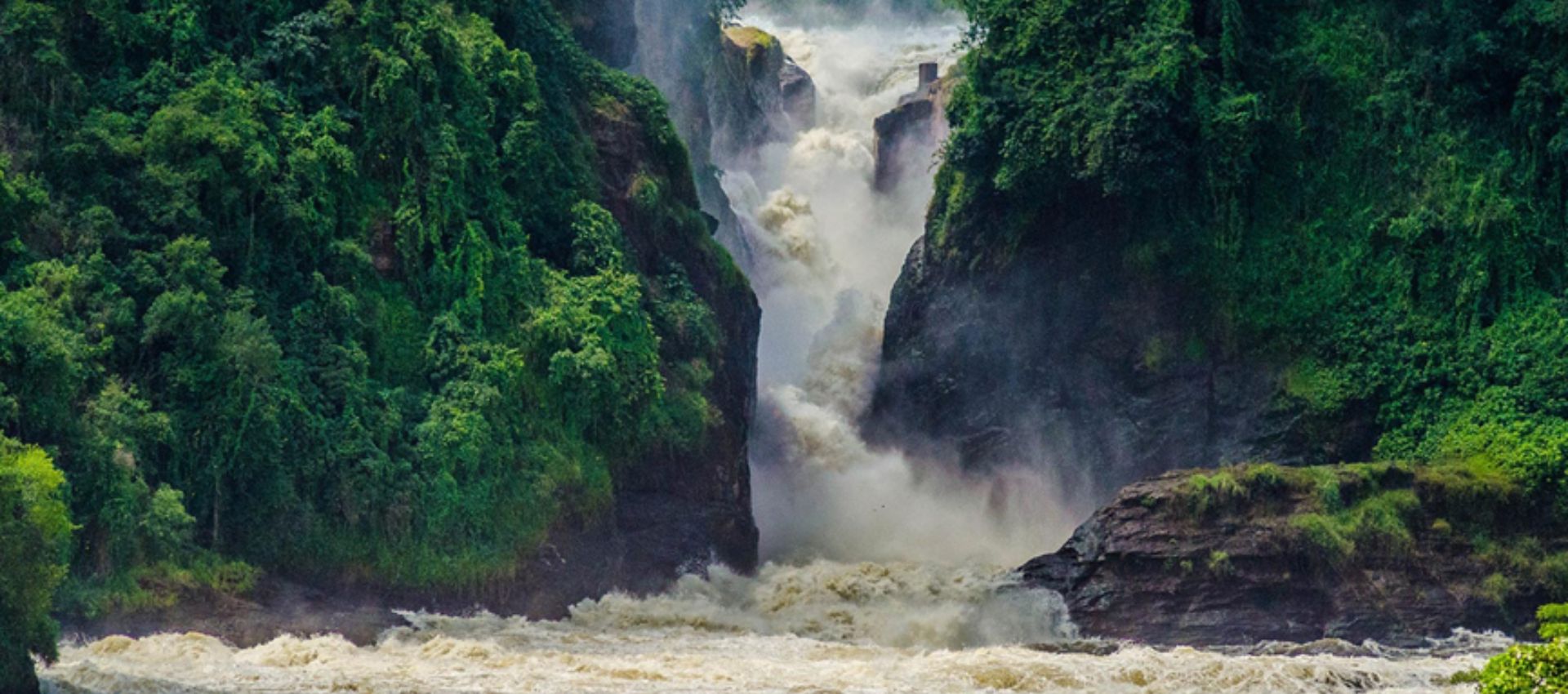
Murchison Falls National Park is Uganda’s largest national park and one of the country’s most important safari destinations. The park combines broad savannah plains, woodland, riverine habitats and the Victoria Nile, culminating in the spectacular Murchison Falls, where the river is forced through a narrow gorge before continuing toward Lake Albert.
Quick answer: When should you visit Murchison Falls?
| Your priority | Best time to visit |
|---|---|
| Best overall wildlife viewing | June–September |
| Dry-season safari | December–February & June–September |
| Best chance of animals around water | June–September |
| Birdwatching | January–March |
| Fewer tourists | March–May & October–November |
| Green landscapes | March–May & October–November |
| Photography | December–February or June–September |
| Boat safari on the Nile | Year-round, with dry-season conditions often easier |
| First-time Uganda safari | June–September |
| Budget-conscious traveler | Shoulder/wetter months |
| Combining Murchison with a longer Uganda safari | December–February or June–September |
UWA’s visitor information identifies December to late February and June to September as the best general periods to visit because animals tend to concentrate around water points.
Why the timing matters in Murchison Falls National Park
Murchison Falls is not simply a waterfall destination.
The park is a large wildlife ecosystem where the Victoria Nile, savannah, woodland and riverine habitats influence where animals spend their time.
During drier conditions, vegetation becomes less dense and water becomes increasingly important to wildlife. Animals can therefore become easier to locate, particularly around permanent water sources and the Nile.
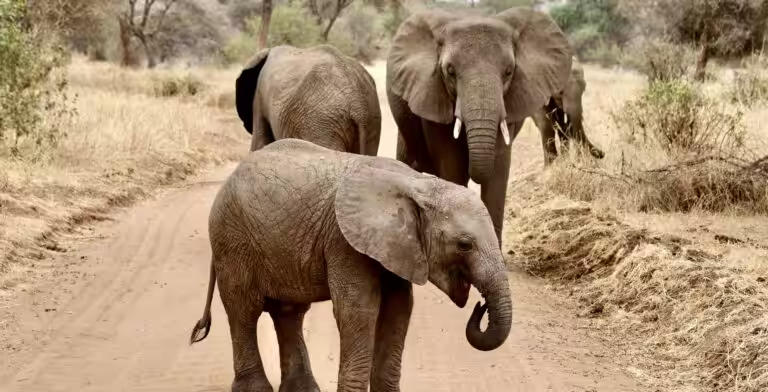
That can make a morning game drive considerably more productive for travelers hoping to see:
- Elephants
- Giraffes
- Buffalo
- Uganda kob
- Jackson’s hartebeest
- Antelopes
- Lions
- Leopards
- Hippos
- Nile crocodiles
The park’s famous boat safari adds another dimension because the Nile concentrates wildlife along its banks.
However, wildlife is wild and sightings are never guaranteed. A dry-season visit improves the conditions for viewing, not the certainty of seeing a particular animal.
Best time to visit Murchison Falls for wildlife viewing
June to September: the best overall safari season
If someone asked me to choose one broad period for a first Murchison Falls safari, June to September would be one of my strongest recommendations.
These months generally provide drier conditions, making game-drive roads more accessible and vegetation less dense.
UWA’s current park material specifically lists June to September among the best periods to visit because wildlife becomes more concentrated around water sources.
This is particularly useful for travelers who want to combine:
Morning game drive + afternoon Nile boat cruise + Murchison Falls hike
within a relatively short itinerary.
The park can be hot during the day, however. UWA documentation records typical daytime temperatures around 25–32°C, with cooler nights.
Why June–September works well
- Lower rainfall
- Better road conditions
- Easier wildlife spotting
- Animals increasingly use water sources
- Good conditions for photography
- Excellent combination of game drives and boat trips
- Generally comfortable for outdoor activities
The downside
This is one of the more popular periods for safari travel, so some lodges and camps can be busier than during the wetter months.
December to February: another excellent dry-season window
The second major dry period runs from December through February.
UWA identifies December to late February as one of the park’s best general visiting periods.
December can be particularly attractive for travelers who want to begin or end the year with a Uganda safari.
January and February are generally hot, but the relatively drier conditions can make game drives rewarding.
This period is also particularly interesting for birdwatchers because UWA identifies January–March as a prime birdwatching period in Murchison Falls, when tourist numbers are lower.
December–February is ideal for:
- First-time safari travelers
- Families
- Wildlife photography
- Game drives
- Nile boat cruises
- Birding
- Travelers combining Murchison with other Ugandan destinations
January: excellent for wildlife and birding
January is one of the most attractive months for a Murchison Falls safari.
The weather is typically relatively dry, wildlife viewing conditions are favourable and the park’s birdlife can be particularly rewarding.
For birders, January falls within UWA’s recommended January–March birdwatching window for Murchison Falls.
The park’s varied habitats mean that a safari can produce much more than large mammals.
A good birding itinerary may combine:
Savannah + riverine habitat + Nile boat cruise + forest edge
rather than concentrating entirely on the game-drive tracks.
February: one of the best months for a classic safari
February is another strong month for visitors who prioritize wildlife.
Expect warm conditions and generally dry roads, although temperatures can become high.
Start game drives early.
This is important in Murchison Falls because the hottest part of the day can reduce animal activity, particularly in exposed savannah areas.
A well-planned safari therefore takes advantage of:
Early morning → wildlife activity → breakfast → rest → afternoon boat cruise → evening activity
rather than trying to drive through the park continuously during the hottest hours.
March: a transition month with strong birding potential
March can be an interesting compromise.
The park becomes progressively wetter, but this does not mean wildlife disappears.
UWA identifies January–March as a particularly good period for birdwatching, and the lower visitor numbers can be attractive to birders and photographers.
If you don’t mind occasional rain and want a quieter experience, March deserves consideration.
The landscape may also begin looking greener as rainfall increases.
April and May: wet season, green scenery and fewer crowds
April and May are among the wetter months.
A recent UWA environmental management document describes the wetter periods as associated with more frequent showers and thunderstorms, while dry-season conditions generally extend from December–February and June–September.
The advantage?
The park becomes beautifully green.
Fresh vegetation creates attractive photographic conditions, skies can become dramatic and visitor numbers can be lower.
For travelers who dislike crowded safari destinations, this can be an appealing time to visit.
But there are trade-offs
Rain can:
- Make some tracks muddy
- Interrupt game drives
- Affect driving times
- Make photography more challenging
- Require flexible scheduling
This is why travelers visiting during the wetter months should use an experienced safari operator and a capable 4WD vehicle.
June: the start of the strong dry season
June marks the beginning of one of Murchison Falls’ most attractive safari periods.
As conditions become drier, vegetation gradually becomes less dense and animals increasingly depend on reliable water sources.
This can improve game viewing.
June is therefore an excellent month for travelers who want the benefits of the dry season without necessarily traveling during the busiest part of the peak season.
July and August: excellent wildlife viewing
July and August are among the strongest months for a traditional Murchison Falls safari.
The dry conditions make it easier to navigate the park and wildlife can become more concentrated around water.
This is particularly valuable on game drives across the northern sector, where open savannah provides good visibility.
A typical safari might combine:
Early morning
Game drive across the savannah.
Midday
Return to your lodge for lunch and relaxation.
Afternoon
Boat safari along the Victoria Nile.
Evening
Optional short game drive or lodge relaxation.
The combination gives you two very different wildlife perspectives in the same day.
September: excellent safari conditions
September remains within UWA’s recommended June–September dry-season window.
For travelers who prioritize wildlife, this is another excellent choice.
It can also be a good month for combining Murchison Falls with other destinations in northern and western Uganda.
For example:
Murchison Falls → Kibale Forest → Queen Elizabeth → Bwindi
creates a diverse Uganda itinerary covering savannah wildlife, primates, forests and gorillas.
October and November: the wetter season returns
October and November generally receive more rainfall.
However, calling these months “bad” for safari would be misleading.
Murchison Falls remains open for wildlife viewing throughout the year, and the wetter season can provide:
- Green landscapes
- Fresh vegetation
- Fewer tourists
- Excellent photographic backgrounds
- Good birding opportunities
- Potentially lower accommodation demand
The key is to accept that the safari may be less predictable from a road-condition perspective.
Best time for a Murchison Falls boat safari
One of the park’s greatest advantages is that the Nile provides a wildlife experience regardless of whether you’re sitting in a safari vehicle or on a boat.
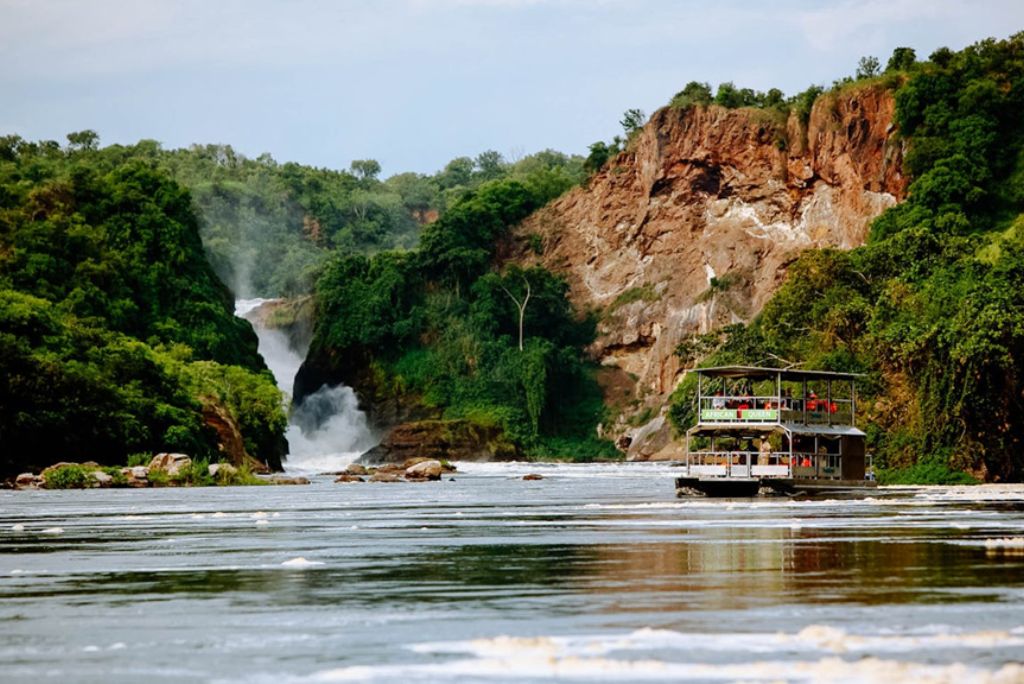
The classic boat trip travels along the Victoria Nile toward the base of Murchison Falls.
From the water you can often observe:
- Hippos
- Nile crocodiles
- Elephants near the river
- Buffalo
- Waterbirds
- Antelope
- Other wildlife coming to drink
The river itself is the attraction.
UWA describes approximately 80 km of the Victoria Nile flowing through the protected area, with the river passing through rapids and cascades before the famous falls and continuing toward Lake Albert.
Is the boat safari available year-round?
Generally, yes, although actual operating conditions can depend on weather, water conditions, park management and operator schedules.
For the latest operational information, confirm with UWA or your safari operator before departure.
Best time to see Murchison Falls itself
The waterfall can be visited throughout the year.
The falls do not follow a seasonal migration schedule.
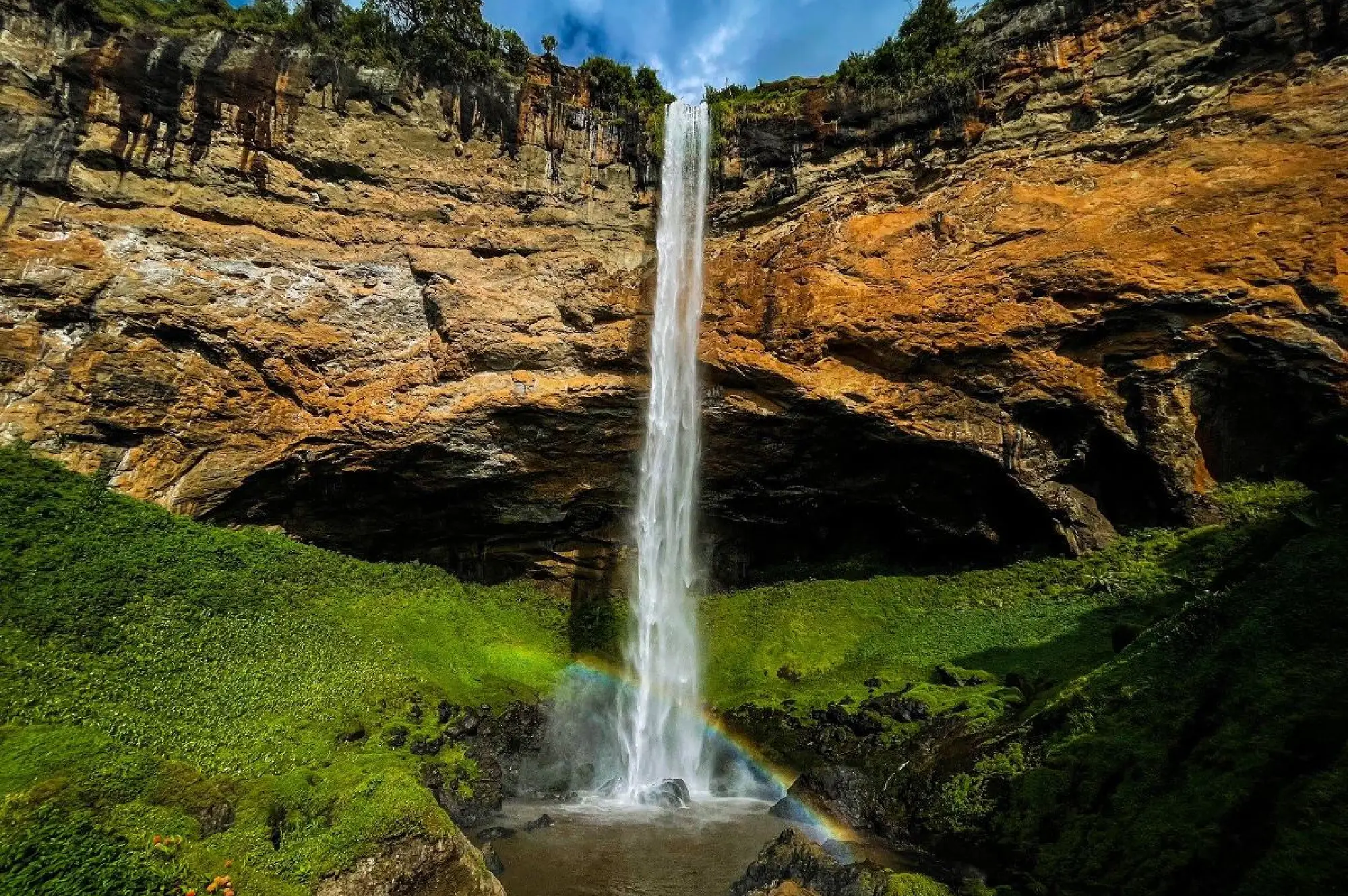
The Victoria Nile is forced through a remarkably narrow gorge before plunging downstream, creating the dramatic waterfall for which the park is named. UWA describes the gorge as approximately 8 metres wide and the falls as dropping about 45 metres.
During wetter periods, the surrounding landscape can be especially lush.
During drier periods, the clearer skies and easier roads may make the overall experience more comfortable.
So if the waterfall is your primary reason for visiting, you don’t need to restrict your trip to the dry season.
Best time for birdwatching in Murchison Falls
For serious birders, January to March deserves special attention.
UWA specifically identifies January–March as the prime birdwatching period for Murchison Falls, partly because tourist numbers are lower.
Uganda overall is a major birding destination, with UWA recording more than 1,000 species nationally.
Murchison’s combination of:
- Savannah
- Woodland
- River
- Wetlands
- Riverine forest
creates a varied birding environment.
If birding is your main objective, tell your safari operator before booking.
A general wildlife guide and a specialist birding guide can produce very different experiences.
Best time to see wildlife around the Nile
If your main objective is to see animals around the river, the dry season has an advantage.
As natural water availability decreases away from permanent rivers and waterholes, the Nile becomes increasingly important.
This can make the riverbank particularly productive for wildlife viewing.
The best strategy is to combine:
Morning game drive + afternoon boat safari
rather than relying on only one activity.
Is the rainy season a bad time to visit Murchison Falls?
No.
This is one of the most important points travelers should understand.
The rainy season is simply different.
If you want the easiest road conditions and generally strongest concentration of animals, choose the dry season.
If you value:
- Green scenery
- Fewer visitors
- Birding
- Photography
- Flexible travel dates
- Potentially better accommodation value
then the wetter season can be an excellent alternative.
The park’s climate is variable across the protected area. Recent UWA documentation notes that the eastern end is wetter than the western section, with rainfall varying considerably between locations.
So broad statements such as “Murchison is rainy from X to Y” should be treated as planning guidelines rather than guarantees.
Cheapest time to visit Murchison Falls National Park
If your goal is to reduce the overall safari budget, consider traveling during the shoulder or wetter periods rather than the most popular dry-season windows.
However, don’t choose dates solely because a lodge advertises a lower room rate.
Consider the total trip cost:
Accommodation + transport + park activities + number of nights + road conditions + itinerary efficiency
A slightly more expensive dry-season safari can sometimes provide better overall value because wildlife viewing is easier and the itinerary can be more efficient.
Best time to visit Murchison Falls with children
For families traveling with children, I generally recommend the drier periods:
December–February or June–September.
Why?
- More predictable road conditions
- Easier game drives
- Less chance of prolonged rain interrupting activities
- Easier packing
- More comfortable planning
The heat is the main consideration.
Children should have plenty of drinking water, sun protection, lightweight clothing and adequate rest between activities.
Best time for photography in Murchison Falls
Photography priorities change with the season.
Dry season
Excellent for:
- Wildlife portraits
- Elephants around water
- Giraffes against open savannah
- Clearer visibility
- Golden-hour game drives
Wet/green season
Excellent for:
- Green landscapes
- Dramatic clouds
- Bird photography
- Fresh vegetation
- More atmospheric scenes
There is therefore no single “best photography month.”
Instead, decide whether you prefer wildlife concentration and clear visibility or lush landscapes and dramatic weather.
How many days do you need in Murchison Falls?
For a first visit, 3 days and 2 nights is a good minimum.
A more relaxed safari should allow 3 nights or more.
Example 3-day Murchison Falls safari
Day 1:
Travel to Murchison Falls → check in → afternoon boat cruise or evening activity.
Day 2:
Early morning game drive → lunch and rest → afternoon boat safari to the base of Murchison Falls.
Day 3:
Morning game drive → visit the top of Murchison Falls → depart.
If wildlife photography or birding is your priority, adding another night provides considerably more flexibility.
What should you pack for Murchison Falls?
Regardless of when you visit, pack for heat and sun.
Recommended essentials include:
- Lightweight breathable clothing
- Long trousers for bush activities
- Wide-brimmed hat
- Sunglasses
- Sunscreen
- Insect repellent
- Binoculars
- Camera and spare batteries
- Reusable water bottle
- Comfortable walking shoes
- Light rain jacket
- Waterproof bag for electronics
- Neutral-coloured safari clothing
During wetter months, add a proper waterproof layer and protection for camera equipment.
Uganda Tourism Center also recommends sunscreen, insect repellent, a flashlight, spare/rechargeable batteries and waterproof bags for travelers.
Murchison Falls month-by-month
| Month | Weather tendency | Wildlife | Birding | Visitor level | Overall recommendation |
|---|---|---|---|---|---|
| January | Dry/hot | Excellent | Excellent | Moderate | ⭐⭐⭐⭐⭐ |
| February | Dry/hot | Excellent | Excellent | Moderate | ⭐⭐⭐⭐⭐ |
| March | Transition/wetter | Good | Excellent | Lower | ⭐⭐⭐⭐ |
| April | Wet | Good | Good | Lower | ⭐⭐⭐ |
| May | Wet | Good | Good | Lower | ⭐⭐⭐ |
| June | Drying | Excellent | Very good | Moderate | ⭐⭐⭐⭐⭐ |
| July | Dry | Excellent | Very good | Higher | ⭐⭐⭐⭐⭐ |
| August | Dry/hot | Excellent | Very good | Higher | ⭐⭐⭐⭐⭐ |
| September | Dry/transition | Excellent | Very good | Moderate | ⭐⭐⭐⭐⭐ |
| October | Wetter | Good | Good | Lower | ⭐⭐⭐ |
| November | Wetter | Good | Good | Lower | ⭐⭐⭐ |
| December | Dry/transition | Excellent | Very good | Moderate | ⭐⭐⭐⭐⭐ |
Important: Uganda’s rainfall patterns are not perfectly predictable. Treat these as seasonal planning guidelines, not guarantees.
Dry season vs rainy season in Murchison Falls
| Factor | Dry season | Wet season |
|---|---|---|
| Wildlife visibility | ⭐⭐⭐⭐⭐ | ⭐⭐⭐⭐ |
| Road conditions | Generally better | Can be muddy |
| Waterhole viewing | Excellent | More dispersed wildlife |
| Green scenery | Moderate | Excellent |
| Birding | Very good | Good–excellent |
| Photography | Excellent | Excellent |
| Visitor numbers | Higher | Lower |
| Heat | Higher | Slightly moderated |
| Rain disruption | Lower | Higher |
| Best for first safari | Yes | Possible |
| Best for quiet safari | Less ideal | Yes |
What is the absolute best month to visit Murchison Falls?
If you want one simple answer:
June, July, August and September are among the best months for a classic Murchison Falls wildlife safari.
For a combination of wildlife + birding + relatively dry conditions, January and February are also excellent.
For birding with fewer tourists, January to March deserves particular attention because UWA specifically identifies that period as prime birdwatching season.
But don’t dismiss the wetter months.
A traveler who values green landscapes, fewer visitors and a more relaxed safari may actually prefer March, April, May, October or November.
Frequently Asked Questions About the Best Time to Visit Murchison Falls
What is the best month to visit Murchison Falls National Park?
June through September is one of the strongest periods for general wildlife viewing. December through February is another excellent dry-season window.
What is the rainy season in Murchison Falls?
Rainfall is generally more frequent during March–May and October–November, although recent UWA documentation notes considerable local variation and describes a broader wet period with a short dry spell around July.
Can I visit Murchison Falls during the rainy season?
Yes. The park is open year-round, and the wet season can provide green scenery, fewer visitors and excellent birding conditions.
When is the best time to see animals in Murchison Falls?
The dry seasons are generally best because wildlife tends to concentrate around permanent water sources and vegetation is less dense. UWA recommends December–February and June–September for general wildlife viewing.
What is the best time for birding in Murchison Falls?
January to March is specifically identified by UWA as a prime birdwatching period, with fewer tourists.
Is July a good month for Murchison Falls?
Yes. July falls within the June–September dry-season window and can provide excellent game viewing.
Is August too hot for Murchison Falls?
August can be hot, particularly during the middle of the day. Plan game drives for early morning and late afternoon and maintain good hydration.
Is December a good time to visit Murchison Falls?
Yes. December begins one of the park’s favourable dry-season periods and can be an excellent month for wildlife viewing.
How many days should I spend in Murchison Falls?
Allow at least 2 nights for a worthwhile first visit. Three nights is preferable if wildlife, photography or birding is a major priority.
Can I see Murchison Falls and wildlife in one day?
Technically yes, but it is rushed. A proper safari should allow enough time for a game drive and Nile boat cruise, with additional time for the waterfall itself.
Is Murchison Falls worth visiting in the wet season?
Yes. It depends on your priorities. The wet season is especially attractive for travelers who value green landscapes, fewer visitors and birding rather than guaranteed dry-road conditions.
Final verdict: when should you book your Murchison Falls safari?
For most first-time visitors, June to September is the safest recommendation for excellent wildlife viewing and generally favourable safari conditions. December to February is another strong option, particularly if you want to combine wildlife with birding.
But if you’re a birder, photographer or experienced safari traveler, don’t automatically avoid the wetter months.
Murchison Falls is a year-round destination.
The best month depends on what you want to experience.
If you want wildlife concentration and easy game drives, go during the dry season.
If you want birds and fewer tourists, consider January to March.
If you want green scenery and a quieter safari, consider the wetter months.
And if you’re building a longer Uganda safari, don’t look at Murchison Falls in isolation. It works particularly well as part of an itinerary connecting Ziwa Rhino Sanctuary, Murchison Falls, Kibale Forest, Queen Elizabeth National Park and Bwindi Impenetrable National Park.
The key is not simply choosing the “best month.”
Choose the month that best matches the safari you want.
Plan your Murchison Falls safari
For current park information, conservation guidance and official visitor information, consult the Uganda Wildlife Authority (UWA), which manages Murchison Falls National Park and Uganda’s other protected areas. Uganda Wildlife Authority – Murchison Falls National Park