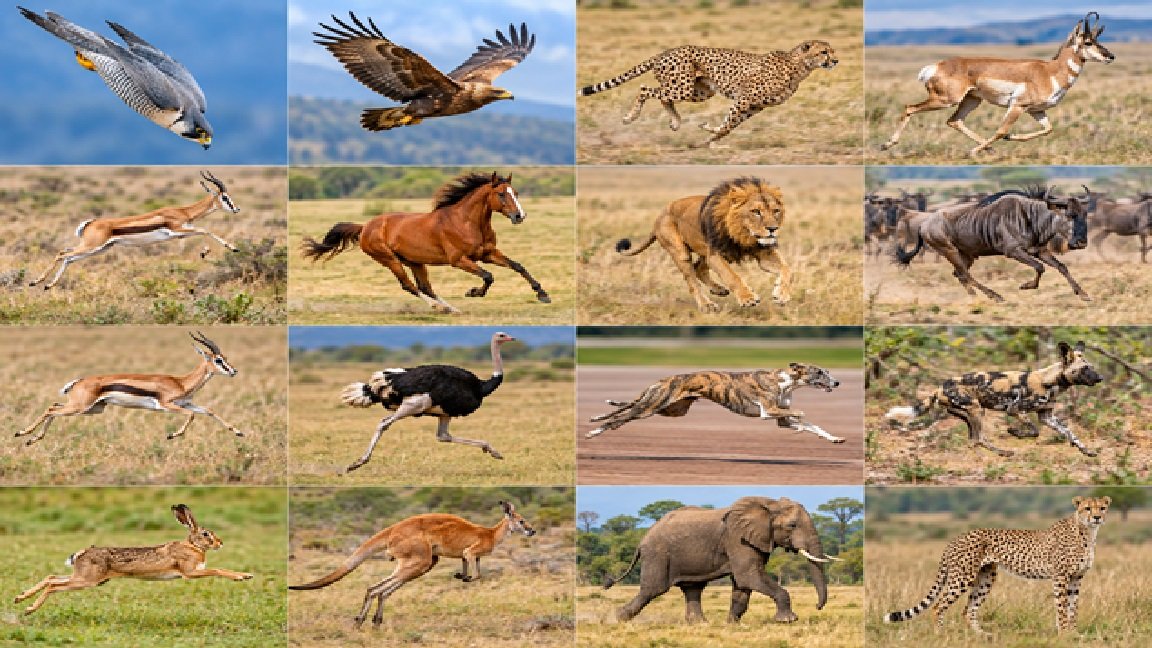
Fastest Animal in the World:15 Incredible Speedsters and the Fastest Animals in Africa
INTRODUCTION
Imagine watching a wild animal accelerate across an open African savannah, covering enormous distances in just a few seconds. Its body stretches forward, its feet barely touch the ground, and before you can raise your camera, it has disappeared into the grassland.
Speed is one of nature’s most remarkable survival adaptations. Some animals depend on incredible acceleration to catch prey, while others rely on sustained running to escape predators or travel across vast landscapes.
But what is the fastest animal in the world? Is it the cheetah, the peregrine falcon, or another remarkable species? The answer depends on how speed is measured.
Quick answer: The peregrine falcon is the fastest animal when diving, with recorded dives exceeding 320 km/h. The cheetah is the fastest land mammal, reaching roughly 96–112 km/h in short bursts. These are different kinds of speed and should not be compared as if measured in the same way.
Quick answer: What is the fastest animal in the world?
The peregrine falcon (Falco peregrinus) is widely recognised as the fastest animal on Earth during its hunting dive, known as a stoop. The cheetah (Acinonyx jubatus) is the fastest land mammal. The ostrich is commonly described as the fastest two-legged animal, reaching speeds of around 69 km/h.
The 15 fastest animals in the world: comparison table
| Animal | Approximate speed / note | Category |
| Peregrine falcon | 320+ km/h | Diving bird |
| Golden eagle | High speed during dives; figures vary | Diving bird |
| Cheetah | About 96–112 km/h | Land mammal |
| Pronghorn | About 88–98 km/h often reported | Long-distance land runner |
| Springbok | Up to about 88 km/h often reported | African antelope |
| Quarter horse | About 88 km/h often reported | Domestic horse |
| Lion | Up to about 80 km/h often reported | Big cat |
| Wildebeest | Up to about 80 km/h often reported | African antelope |
| Thomson’s gazelle | Up to about 80 km/h often reported | Gazelle |
| Ostrich | Up to about 69 km/h | Flightless bird |
| Greyhound | Up to about 72 km/h | Domestic dog |
| African wild dog | Speed varies; endurance and pack coordination matter | African predator |
| Hare | Up to about 70 km/h often reported | Mammal |
| Red kangaroo | Up to about 64 km/h often reported | Marsupial |
| African elephant | Not ranked as a speed specialist | Large mammal |
Important: This is an illustrative comparison, not a scientifically verified global ranking from first to fifteenth. Reported speeds vary by source, individual animal, terrain and measurement method. Diving speed, horizontal flight speed, sprinting and sustained running are not directly comparable
Fastest Animal in the World
1. Peregrine falcon: the fastest animal in the world
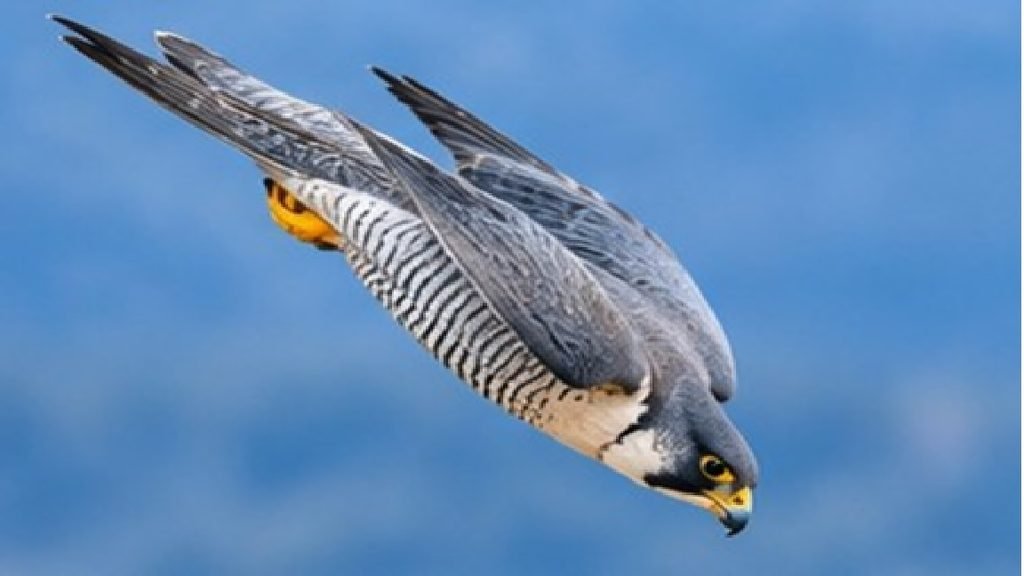
Illustrative image: peregrine falcon in a steep dive.
Approximate speed: More than 320 km/h in a hunting dive
The peregrine falcon (Falco peregrinus) is widely recognised as the fastest animal on Earth. During a hunting manoeuvre called a stoop, it climbs above its prey, folds its wings and dives at extraordinary speed. Its streamlined body, specialised wings and exceptional eyesight help it control the dive. Peregrines occur across much of the world, from coastal cliffs and mountains to urban environments.
2. . Golden eagle: a powerful aerial hunter
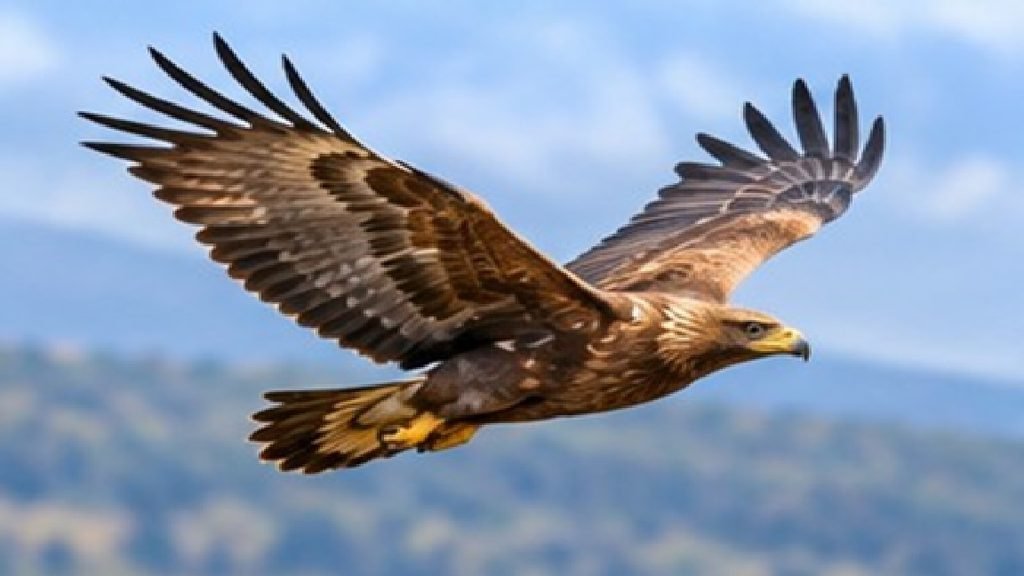
Illustrative image: golden eagle in flight.
Approximate speed: High speeds during dives; reported figures vary
The golden eagle (Aquila chrysaetos) is a large bird of prey known for powerful flight and steep hunting dives. Its broad wings and strong talons make it an effective hunter of mammals and birds. Unlike the peregrine falcon, its speed records are less consistently cited, so it is better described as a fast-diving raptor than assigned a single definitive speed.
3. Cheetah: the fastest land animal
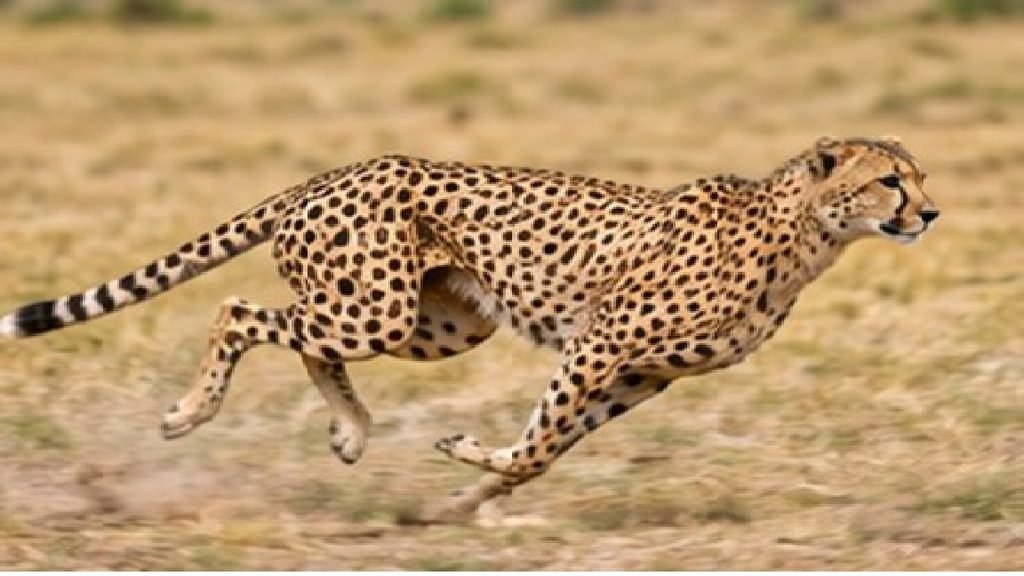
Illustrative image: cheetah sprinting across open grassland.
Approximate speed: Approximately 96–112 km/h in short bursts
The cheetah (Acinonyx jubatus) is the fastest land mammal. Its flexible spine, long limbs, powerful muscles, enlarged nasal passages and tail for balance support explosive acceleration. A cheetah cannot maintain maximum speed for long; a chase uses enormous energy and must be carefully timed. Cheetahs are found in parts of Africa and a small population remains in Iran.
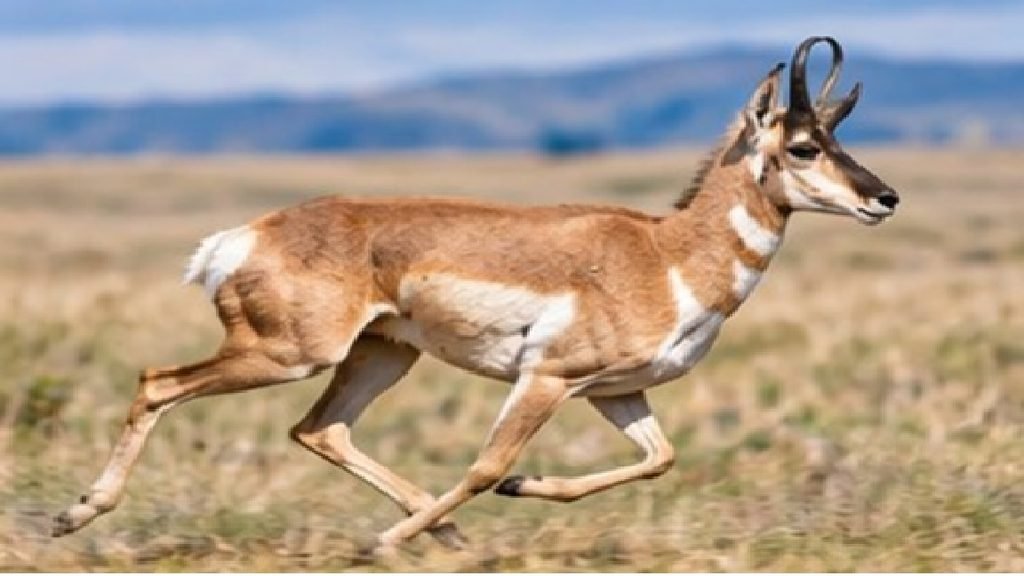
4. Pronghorn: an exceptional long-distance runner
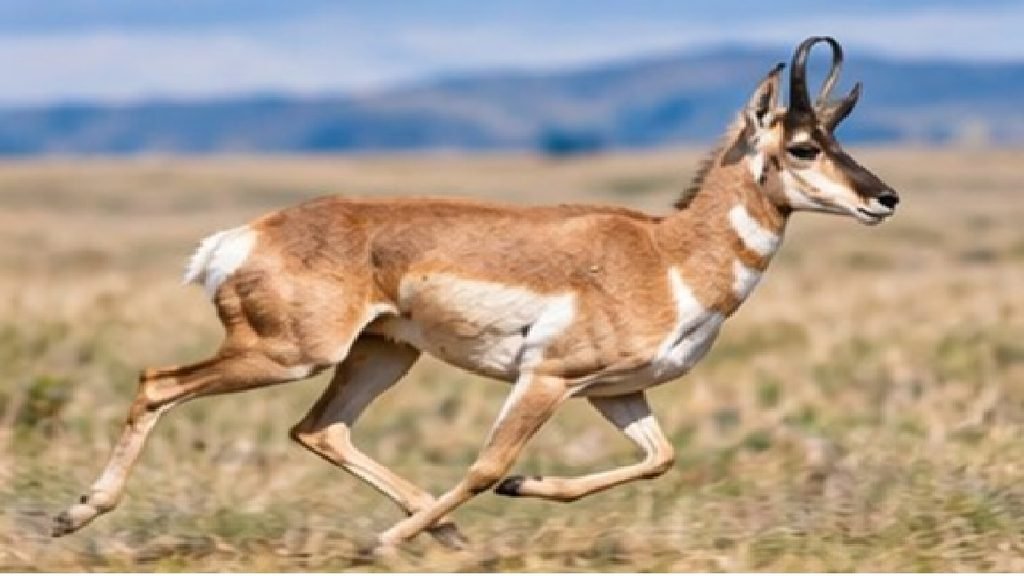
Illustrative image: pronghorn running across open prairie.
Approximate speed: Approximately 88–98 km/h often reported
The pronghorn (Antilocapra americana) is native to North America. It is famous not only for speed but also for its ability to maintain a fast pace over longer distances than a cheetah. This endurance helps it survive in open landscapes where cover is limited.
5. Springbok: one of Africa’s fastest antelopes
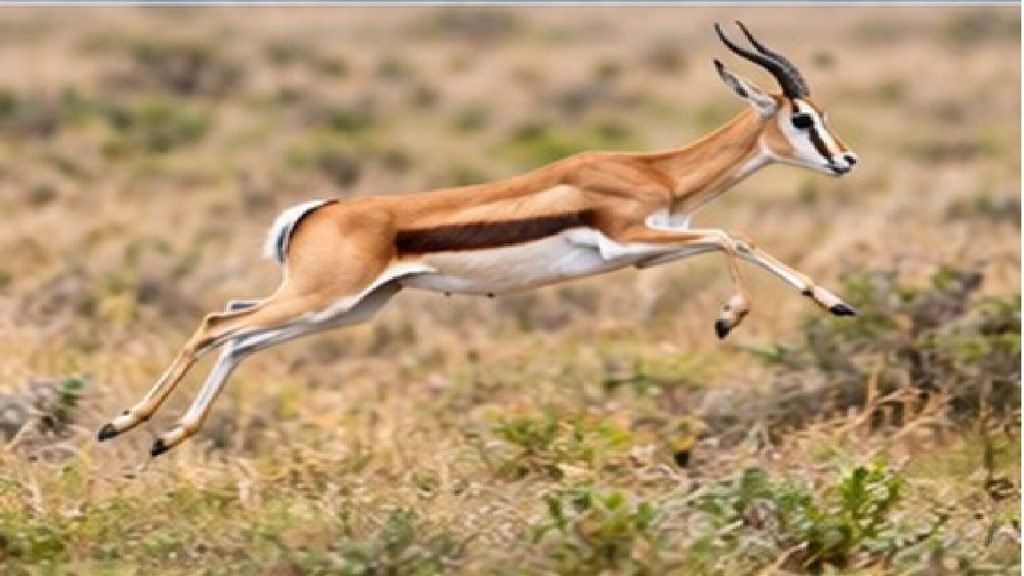
Illustrative image: springbok leaping over grassland.
Approximate speed: Up to approximately 88 km/h often reported
The springbok (Antidorcas marsupialis) lives mainly in southern Africa. It is known for speed, agility and pronking, a distinctive series of high, stiff-legged leaps. These behaviours can help the animal evade predators and communicate alertness.
6. Quarter horse: explosive acceleration
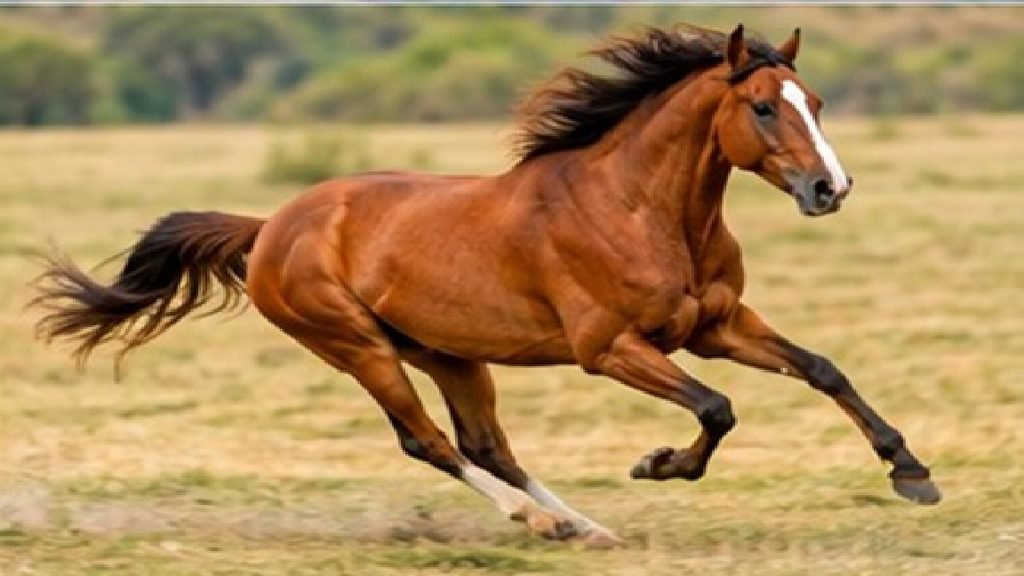
Illustrative image: quarter horse galloping.
Approximate speed: Approximately 88 km/h often reported
The American Quarter Horse is bred for short-distance speed and acceleration. Its muscular hindquarters and compact build make it particularly suited to sprinting. It is a domesticated breed, included here as a comparison rather than a wild-animal safari sighting.
7. Lion: the powerful sprinter of the African savannah
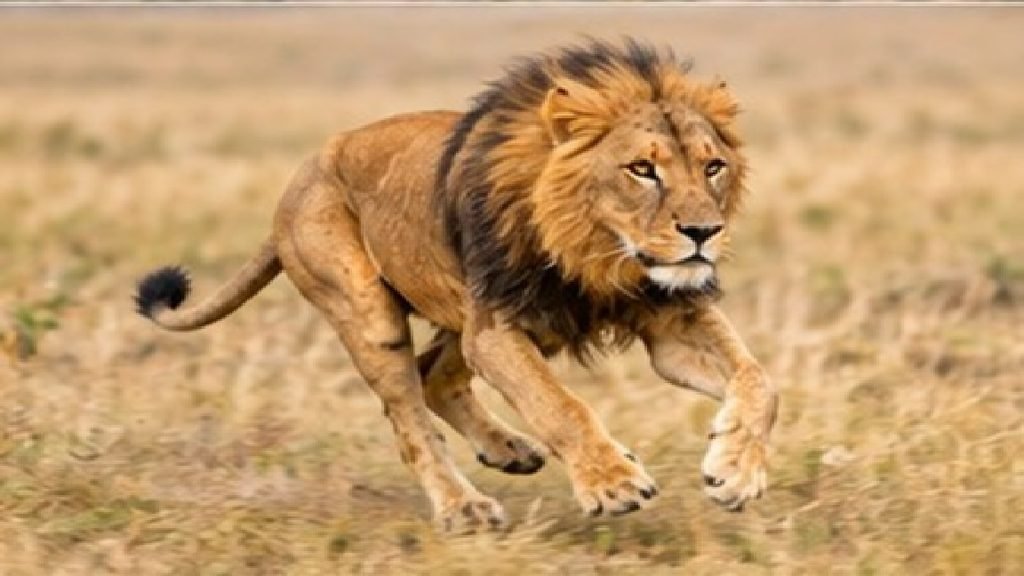
Illustrative image: African lion running.
Approximate speed: Up to approximately 80 km/h in short bursts, often reported
The African lion (Panthera leo) is a powerful predator, but it does not rely on sustained high-speed pursuit. Lions use stealth, strength, teamwork and positioning to approach prey before a short attack. In Uganda, travellers may encounter lions in Queen Elizabeth National Park and Murchison Falls National Park.
8. Wildebeest: speed and migration across the plains
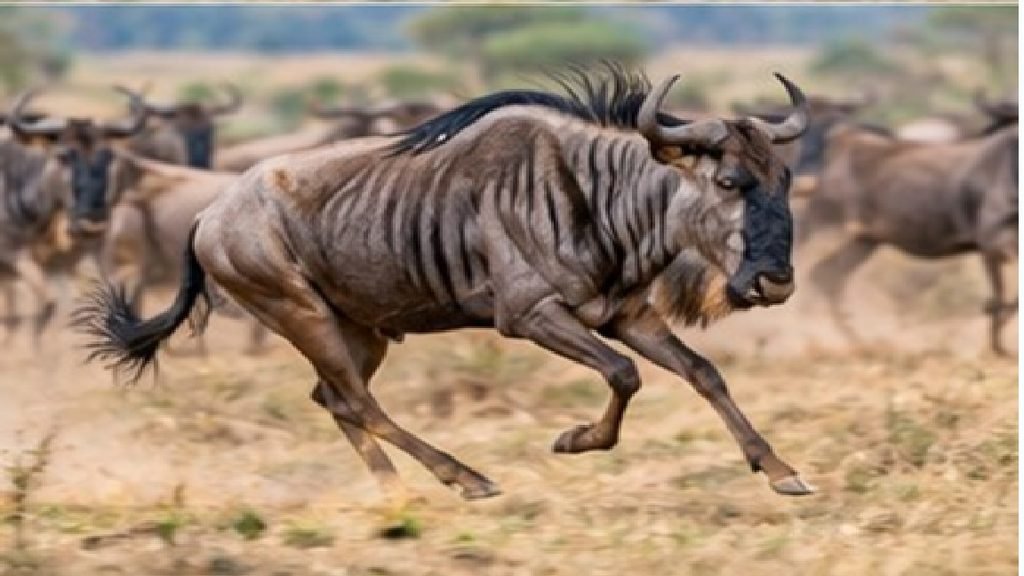
Illustrative image: blue wildebeest running with the herd.
Approximate speed: Up to approximately 80 km/h often reported
The blue wildebeest (Connochaetes taurinus) is famous for its role in the Great Migration across the Serengeti–Mara ecosystem. Herd movement, alertness and rapid running help wildebeest respond to predators and seasonal changes in grazing and water availability.
9. Thomson’s gazelle: a quick and agile runner
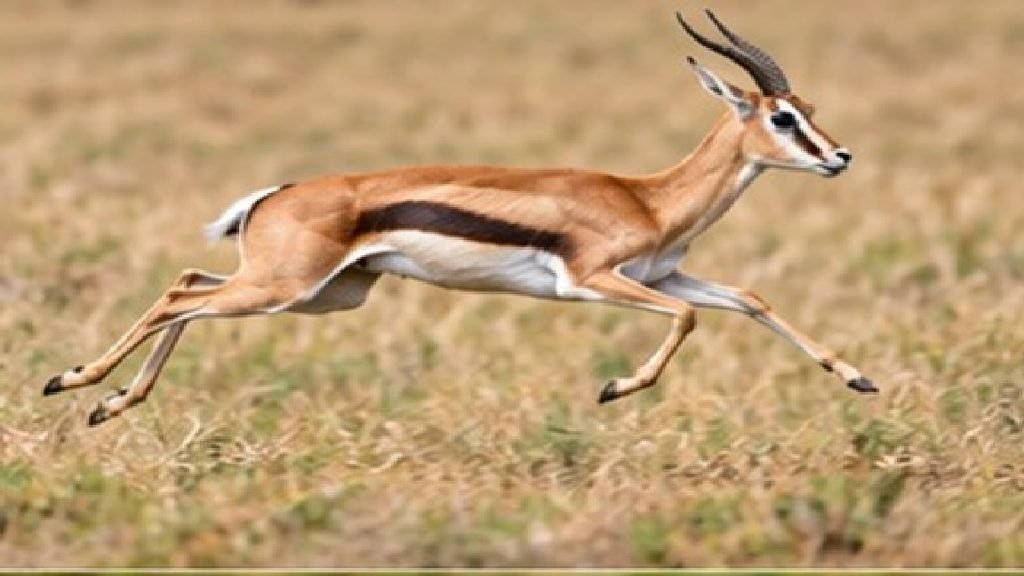
Illustrative image: Thomson’s gazelle running.
Approximate speed: Up to approximately 80 km/h often reported
Thomson’s gazelle (Eudorcas thomsonii) is a familiar East African savannah species. Its acceleration and quick changes of direction can help it escape predators such as cheetahs. Its small size does not prevent it from being one of the grassland’s most agile runners.
10. Ostrich: the fastest two-legged animal
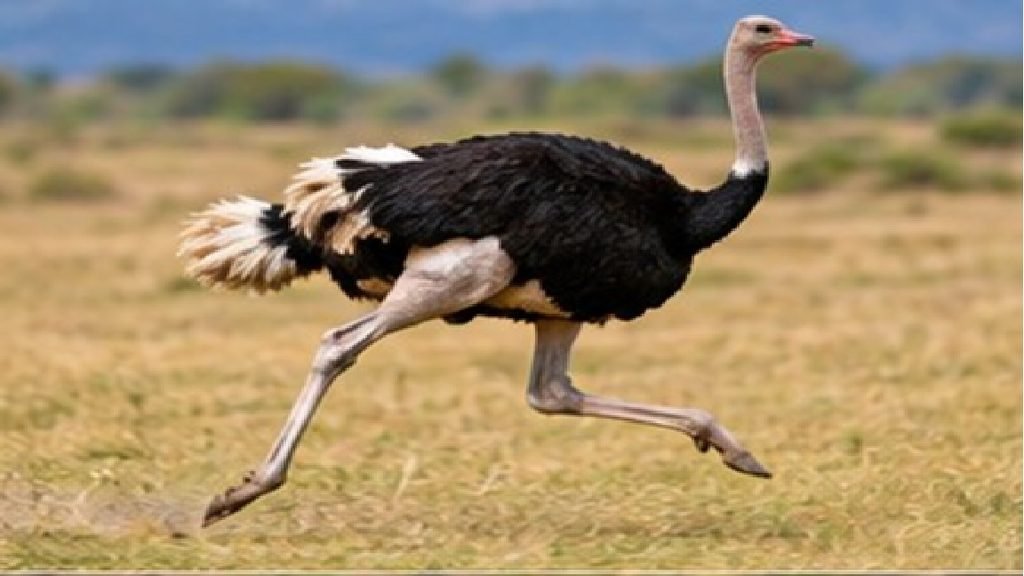
Illustrative image: ostrich running across open ground.
Approximate speed: Up to approximately 69 km/h
The ostrich (Struthio camelus) is the world’s largest living bird. Although it cannot fly, its long, powerful legs allow fast running across open habitats. Its stride, strong feet and ability to change direction help it avoid danger. Ostriches are native to Africa.
11. Greyhound: one of the fastest domestic dogs
Illustrative image: greyhound sprinting.
Approximate speed: Up to approximately 72 km/h often reported
The greyhound is a domestic dog breed adapted for sprinting. Its streamlined body, long legs, flexible spine and muscular hindquarters support rapid acceleration. It is not a wild African species, but it provides a useful comparison with naturally evolved runners.
12. African wild dog: an endurance hunter
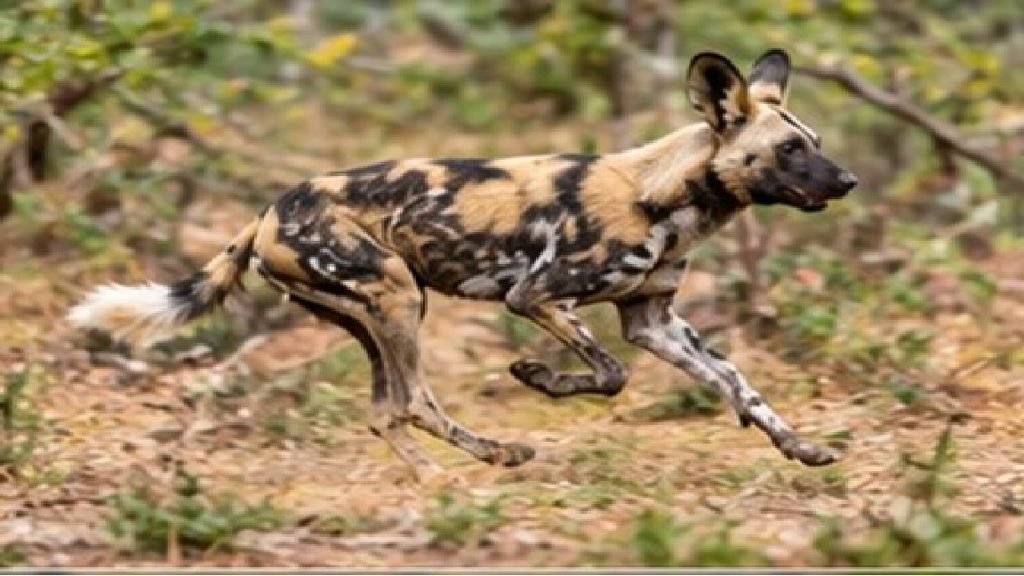
Illustrative image: African wild dog running.
Approximate speed: No single reliable top-speed figure used here
The African wild dog (Lycaon pictus) is an efficient pack hunter. Rather than depending only on a single explosive sprint, the pack uses coordination, stamina and persistent pursuit. Its large rounded ears and distinctive coat make it one of Africa’s most recognisable carnivores.
13. Hare: rapid acceleration and evasive movement
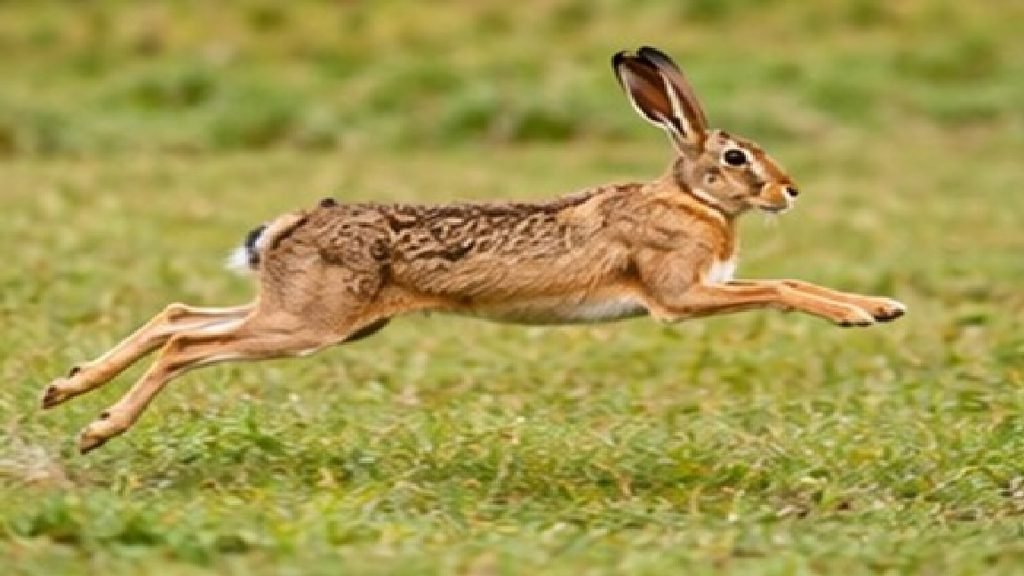
Illustrative image: hare leaping through grass.
Approximate speed: Up to approximately 70 km/h often reported
Hares use powerful hind legs to accelerate quickly and make sudden directional changes. Their speed and agility help them escape predators in open grassland and scrub habitats. Different hare species have different capabilities, so a single figure should be treated as an approximation.
14. Red kangaroo: powerful movement across open country
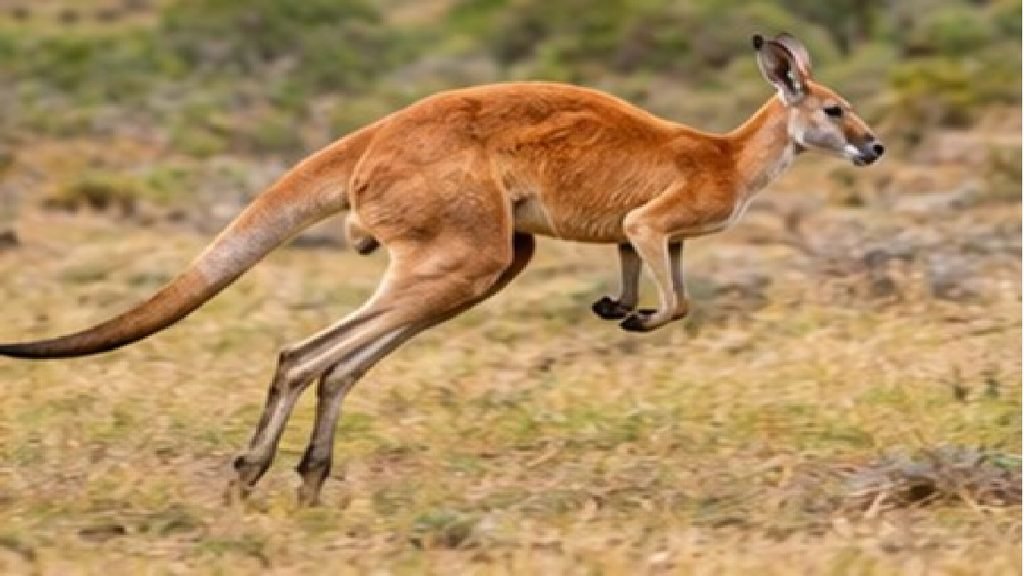
Illustrative image: red kangaroo bounding across open country.
Approximate speed: Up to approximately 64 km/h often reported
The red kangaroo (Osphranter rufus) is Australia’s largest marsupial. It moves through powerful hops using its hind legs, with its tail helping to balance the body. Its locomotion is very different from running by hoofed mammals, so direct comparisons need care.
15. African elephant: a large animal with surprising mobility
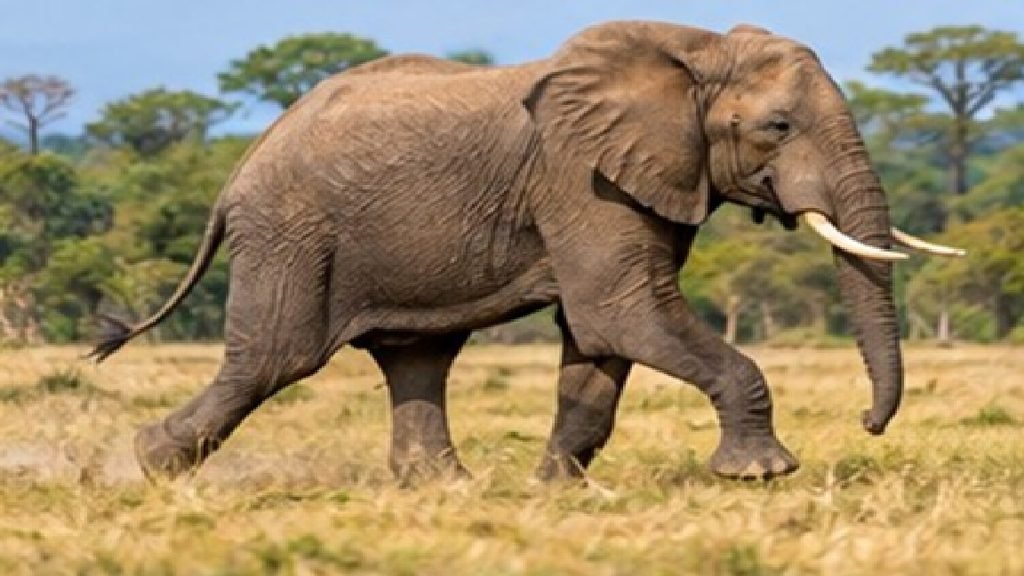
Illustrative image: African elephant walking across savannah.
Approximate speed: Not presented as a speed-record holder
African elephants (Loxodonta africana) are not speed specialists, but they can move quickly over short distances when threatened or motivated. Their size, strength and social behaviour make them extraordinary wildlife to observe. Rather than assigning an uncertain top speed, this guide includes elephants to remind readers that animal movement cannot be judged by speed alone.
What makes the cheetah the fastest land mammal?
The cheetah’s speed is not simply a result of long legs. Its entire body is adapted for high-speed running. A flexible spine increases stride length; powerful hind legs provide propulsion; semi-retractable claws help with traction; and the tail supports balance during rapid turns. Its respiratory and cardiovascular systems support the intense physical demands of a sprint. The trade-off is that a cheetah cannot maintain maximum speed for long, so stealth, timing and distance matter.
Why do animals need to run so fast?
- Hunting: predators such as cheetahs use acceleration to catch prey.
- Escaping predators: antelopes and gazelles use speed and agility to avoid capture.
- Migration: herds move across landscapes in search of grazing, water and breeding grounds.
- Defence: some animals use speed and sudden changes of direction to create distance from threats.
- Survival in open habitats: in savannah environments, alertness and rapid movement can be as important as camouflage.
Where can you see fast and remarkable wildlife on an African safari?
Kidepo Valley National Park, Uganda
Kidepo Valley National Park in northeastern Uganda features open savannah, rugged mountains and diverse wildlife. It is particularly important for Uganda’s small cheetah population. Other wildlife includes lions, elephants, buffaloes, giraffes, ostriches and several antelope species. Cheetah sightings are rare and never guaranteed. Explore
Uganda’s national parks and safari destinations for more destination information.
Queen Elizabeth National Park, Uganda
Queen Elizabeth National Park supports lions, elephants, buffaloes, Uganda kob, waterbucks, hippos, leopards and many bird species. The Ishasha sector is famous for tree-climbing lions, while the Kasenyi plains are popular for game drives. A boat cruise along the Kazinga Channel offers another way to observe wildlife.
Explore Little Rock Safaris’ six-day Murchison, Kibale and Queen Elizabeth safari
Murchison Falls National Park, Uganda
Murchison Falls National Park combines savannah wildlife viewing with the River Nile. The park is home to elephants, giraffes, lions, buffaloes, antelopes, hippos and crocodiles. Game drives in the northern sector and a Nile boat cruise provide different wildlife-viewing experiences.
Read the guide to the best time to visit Murchison Falls National Park
Serengeti National Park, Tanzania
The Serengeti is internationally recognised for its grasslands, predators and the Great Wildebeest Migration. Visitors may see cheetahs, lions, leopards, gazelles, zebras and large herds of wildebeest. Learn more from
Maasai Mara National Reserve, Kenya
The Maasai Mara is another major wildlife destination known for cheetahs, lions, leopards and large herbivore populations. Open grasslands can provide good viewing conditions for predator–prey interactions, especially when wildlife is active.
Can you see the fastest animal in the world on a Uganda safari?
Uganda offers opportunities to see some of Africa’s remarkable wildlife, including cheetahs in Kidepo Valley National Park. However, the peregrine falcon’s global speed record is achieved during a specialised hunting dive and is not a typical savannah safari attraction. The cheetah is the fastest land mammal, and Kidepo is one of the few places in Uganda associated with this rare predator. Sightings are not guaranteed because the population is very small.
Other memorable wildlife experiences in Uganda include lions in Queen Elizabeth National Park, elephants in Murchison Falls National Park, ostriches and savannah wildlife in Kidepo, chimpanzees in Kibale Forest and mountain gorillas in Bwindi Impenetrable National Park.
Explore Little Rock Safaris’ 15-day Uganda Wildlife and Cultural Safari to see how several wildlife destinations can be combined in one journey.
Frequently asked questions about the fastest animals in the world
What is the fastest animal in the world?
The peregrine falcon is generally considered the fastest animal because it can exceed 320 km/h during a hunting dive.
What is the fastest land animal in the world?
The cheetah is the fastest land mammal, reaching approximately 96–112 km/h in short bursts.
What is the fastest animal in Africa?
The cheetah is Africa’s fastest land mammal. It can reach approximately 96–112 km/h during short sprints.
How fast can a cheetah run in km/h?
A cheetah can reach approximately 96–112 km/h, but it can only maintain maximum speed for a short distance.
Is a cheetah faster than a lion?
Yes. Cheetahs are faster over short sprints. Lions rely more on stealth, strength and coordinated hunting.
What is the fastest bird in the world?
The peregrine falcon is the fastest bird when diving, with speeds exceeding 320 km/h.
What is the fastest two-legged animal?
The ostrich is commonly described as the fastest two-legged animal, reaching speeds of approximately 69 km/h.
Can you see cheetahs in Uganda?
Yes. Cheetahs occur in very small numbers in Kidepo Valley National Park. Sightings are rare and cannot be guaranteed.
Which African countries are good for seeing cheetahs?
Kenya, Tanzania, Namibia, Botswana and South Africa are among the important destinations for cheetah viewing. The best choice depends on season, conservation area and itinerary.
What is the difference between the fastest animal and fastest land animal?
The peregrine falcon holds the fastest-animal record during a dive, while the cheetah is the fastest land mammal. The records measure different types of movement.
Experience Africa’s incredible wildlife with Little Rock Safaris
Africa’s wildlife is full of extraordinary adaptations. From the cheetah’s explosive acceleration to the peregrine falcon’s remarkable aerial hunting ability, every species demonstrates a different way of surviving in the natural world.
Uganda is particularly rewarding for travellers who want to experience diverse wildlife, spectacular landscapes and authentic safari adventures. Whether you want to explore the remote wilderness of Kidepo Valley, enjoy game drives in Queen Elizabeth National Park, experience the River Nile in Murchison Falls or combine wildlife viewing with gorilla trekking, the right itinerary makes a significant difference.
Little Rock Safaris creates tailor-made journeys based on travellers’ interests, preferred destinations, travel dates and budgets. Explore our
Uganda wildlife safaris and destinations or contact Little Rock Safaris to start planning your next African adventure.
Authoritative sources and further reading
PLOS ONE – Diving-flight aerodynamics of a peregrine falcon
Smithsonian National Zoo – Cheetah
Smithsonian National Zoo – Ostrich
National Park Service – Peregrine Falcon
Cornell Lab of Ornithology – Peregrine Falcon
Guinness World Records – Fastest mammal on land over long distances
Uganda Wildlife Authority – Cheetah
Uganda Wildlife Authority – Large Carnivore Conservation Action Plan
Leave a Reply